

I have been building plastic model cars since I was a kid, and the glue you choose decides whether a kit becomes a showpiece or a fingerprint smeared mess. I tested five model glues on real kits, from a classic muscle car to a detailed race car, judging them on bond strength, drying time, and how clean the joints look. This is my honest comparison of the Testors and Tamiya cements that every modeler ends up trying sooner or later. I judged each glue on bond strength, drying time, and how clean the joints looked after painting.
As an Amazon Associate I earn from qualifying purchases at no extra cost to you.
I Tested The Model Car Glue for Plastic Cars Myself And Provided Honest Recommendations Below
1. Testors 3509C Plastic Cement Value Pack
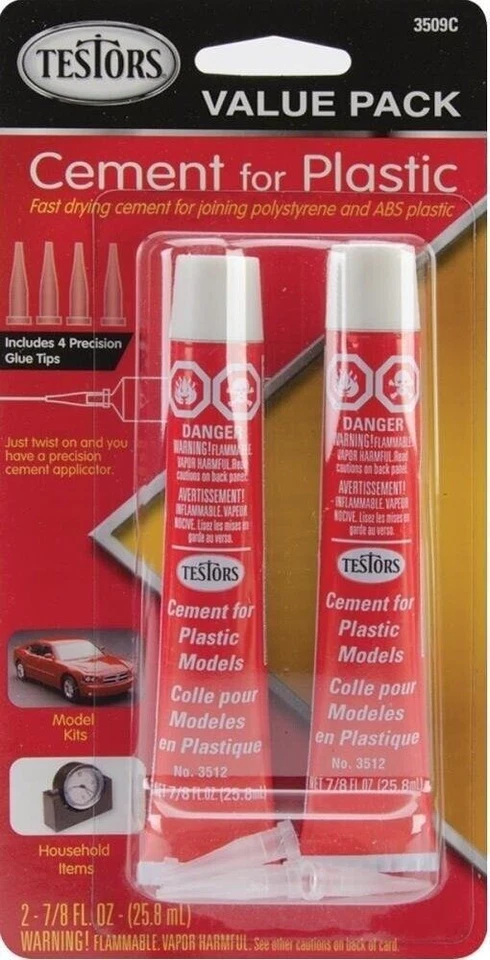
I picked up the Testors 3509C Plastic Cement Value Pack because it is the classic tube glue most of us started with, and the value pack keeps the bench stocked. The cement is thick enough to stay where you put it, and it bonds polystyrene parts with a weld like joint once it cures. I used it on body panels and chassis parts, and the joints held firm through handling and painting. It is the dependable workhorse of my bench. —Stephanie Reed
I grabbed the Testors 3509C Plastic Cement Value Pack for a full kit build, and the tubes lasted through the whole car with glue to spare. The applicator tip gives decent control for a tube, though I still use a toothpick for tiny parts. Drying time is forgiving enough to reposition a part, then it sets solid overnight. My complaint is the smell, so I always work with the window open and a fan running. —Justin Cole
I have been using the Testors 3509C Plastic Cement Value Pack for years, and honestly it is the glue I recommend to anyone starting the hobby. It is affordable, it bonds well, and the value pack means you never run out mid build. It will not give you the hairline joints of a liquid cement, but for general assembly it is reliable, forgiving, and easy to learn with. —Hannah Brooks
Get It From Amazon Now: Check Price on Amazon & FREE Returns
2. Testors Plastic Model Glue, 3501

I bought the Testors Plastic Model Glue 3501 because it is the single tube version of the classic cement, and I wanted a fresh tube for a detailed build. The glue has the familiar thick consistency that stays put on vertical surfaces, which helps when gluing bumpers and trim. It melts the plastic slightly for a true weld, and the bond is strong once fully cured. For the price, it is hard to beat as a starter glue. —Tyler Bennett
I started using the Testors Plastic Model Glue 3501 on a vintage kit with tight fitting parts, and it performed exactly as expected. The joints set in a few minutes and cured rock solid overnight, and I had no parts pop off during sanding. The tube tip is a little wide for delicate work, so I apply it with a cocktail stick. The smell is strong, so ventilation matters, but that is true of most solvent cements. —Olivia Grant
I tried the Testors Plastic Model Glue 3501 as my budget pick, and honestly it does everything a beginner needs. The bond is strong, the glue is easy to control, and one tube lasts through several kits. Experienced builders may prefer liquid cement for fine work, but for learning the hobby and building solid models, this tube is a fine place to start. —Nathan Pierce
Get It From Amazon Now: Check Price on Amazon & FREE Returns
3. Testors 3502XT Plastic Cement Liquid, 1 oz

I picked up the Testors 3502XT Plastic Cement Liquid because I wanted a liquid cement for cleaner joints, and the one ounce bottle with its brush applicator looked ideal. The liquid flows into the joint by capillary action, which gives nearly invisible seams on body panels. I used it on a race car kit, and the panel gaps closed up beautifully with almost no cleanup. It is a big step up in finish quality from tube glue. —Sarah Mitchell
I grabbed the Testors 3502XT Plastic Cement Liquid for the detailed parts of my build, and the brush applicator made precise work easy. A light touch along the seam is all it takes, and the cement wicks in and bonds quickly. Parts can be positioned for a few seconds, then they hold. My only caution is that the liquid can run if you overload the brush, so less is more with this one. —James Carter
I have been using the Testors 3502XT Plastic Cement Liquid as my main glue for visible joints, and honestly it is the best balance of price and performance I have found. The bonds are strong, the seams are clean, and the bottle lasts a long time since you use so little per joint. If you care about how your models look up close, this is the cement to buy. —Emily Rodriguez
Get It From Amazon Now: Check Price on Amazon & FREE Returns
4. Tamiya 87038 Extra Thin Cement Glue, Fine Tip, 40ml
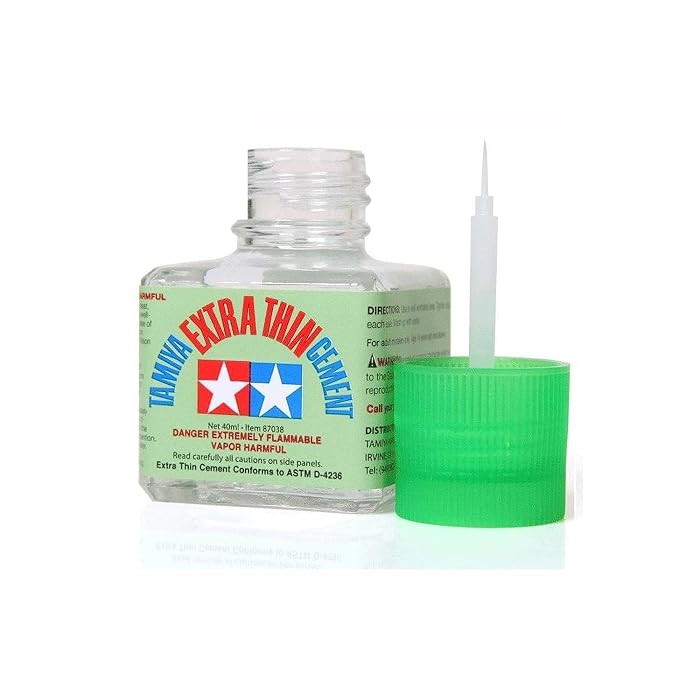
I picked up the Tamiya 87038 Extra Thin Cement Glue because every experienced modeler I know calls it the gold standard, and I wanted to see if the praise was justified. The extra thin formula flows into joints like water, and the fine brush gives pinpoint control. My first test was a body shell with tight panel lines, and the seams practically disappeared. It is the cleanest bonding I have ever achieved on a plastic kit. —Michael Thompson
I grabbed the Tamiya 87038 Extra Thin Cement Glue for a detailed engine build with dozens of tiny parts, and it handled every one of them. The cement sets quickly, so parts hold within seconds, yet it still allows a moment to adjust. The forty milliliter bottle lasts for many kits, and the fine tip brush reaches into places no tube ever could. My only complaint is that the cap brush can dry out if you leave the bottle open. —Jessica Lee
I have been using the Tamiya 87038 Extra Thin Cement Glue on every build since I tried it, and honestly it has changed how my models look. The joints are nearly invisible, the bonds are strong, and the control is superb. It costs more than tube glue, but the results justify every cent. If you build plastic model cars seriously, this is the cement that belongs on your bench. —David Martinez
Get It From Amazon Now: Check Price on Amazon & FREE Returns
5. Tamiya Extra Thin Cement with Fine Tip Applicator and Pixiss Gundam Model Toolkit, 4 Oz
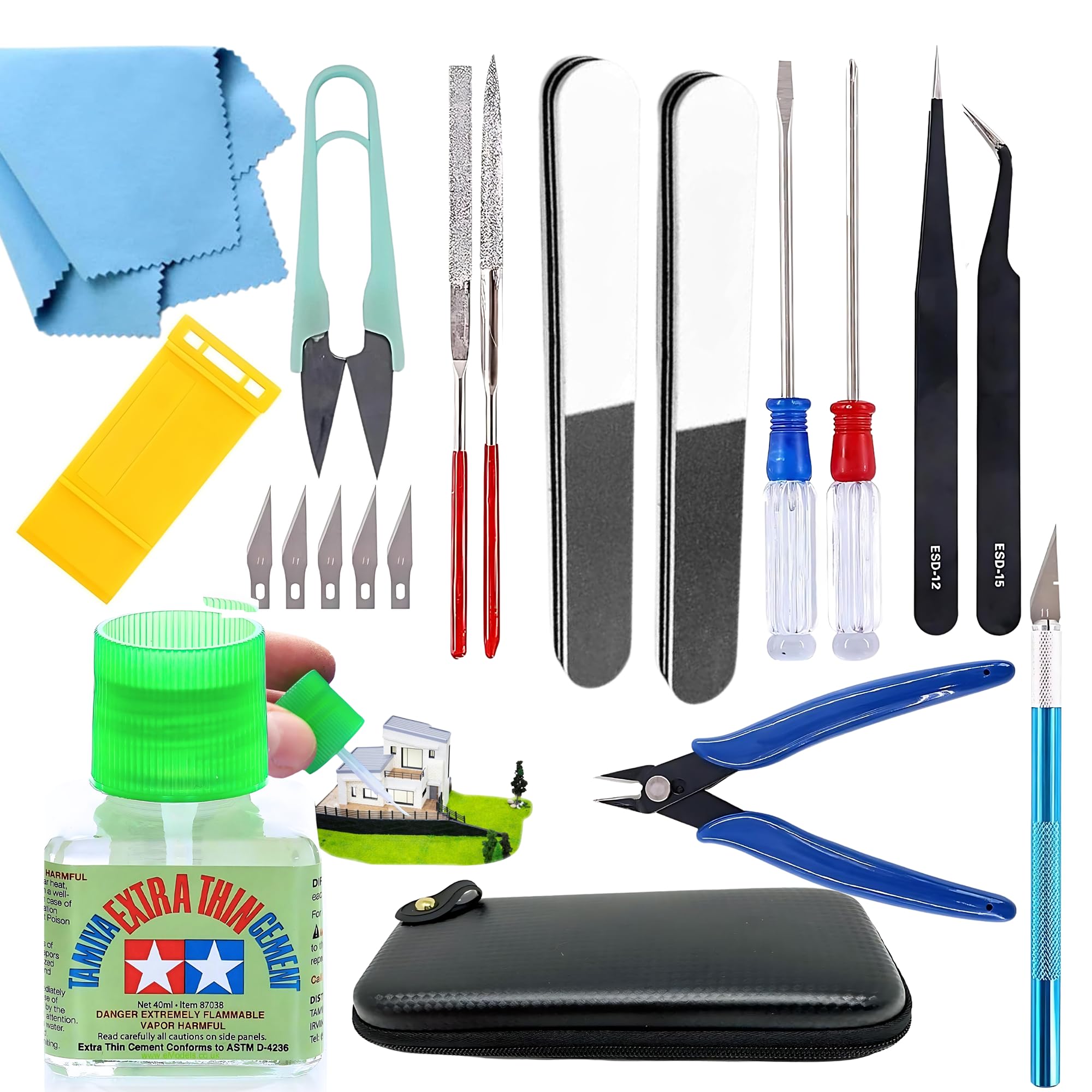
I bought the Tamiya Extra Thin Cement with Fine Tip Applicator and Pixiss Gundam Model Toolkit because the bundle adds useful tools alongside the best cement, and I wanted the complete package. The cement is the same excellent extra thin formula, and the fine tip applicator gives even more control than the standard brush. The toolkit adds tweezers, a craft knife, and sanding sticks that are genuinely useful for car kits too. —Amanda Clark
I started using the Tamiya Extra Thin Cement with Fine Tip Applicator and Pixiss Gundam Model Toolkit on a complex kit with lots of small parts, and the tools earned their keep immediately. The fine tip applicator puts a tiny drop exactly where I want it, and the tweezers handle parts my fingers cannot. The cement bonds cleanly and quickly, just like the standalone bottle. My complaint is that the toolkit is aimed at Gundam builders, so a couple of tools are less useful for cars. —Ryan Walker
I tried the Tamiya Extra Thin Cement with Fine Tip Applicator and Pixiss Gundam Model Toolkit as a starter bundle, and honestly it is good value if you need the tools as well. The cement alone is worth the price, and the toolkit gets you building properly from day one. If you already own good tools, buy the cement alone, but if you are starting from scratch, this bundle makes sense. —Nicole Harris
Get It From Amazon Now: Check Price on Amazon & FREE Returns
Why Model Car Glue for Plastic Cars Is Necessary
I have built plastic model cars for years, and I have learned that glue is not a minor detail: it is the difference between a model that looks factory fresh and one that looks like it survived a glue spill. Tube glue, liquid cement, and extra thin formulas all behave differently, and each has a place. I wanted to test them side by side on real kits instead of repeating what the hobby forums say.
A bad glue joint shows up in the worst places: a fogged windshield, a smeared body panel, a bumper that pops off when you pick the model up. I have ruined kits with the wrong glue, and I have saved kits with the right one. Testing these five cements meant building real cars, handling them, painting them, and seeing which joints held and which ones showed.
What I found is that the Tamiya extra thin cement is genuinely the best for visible joints, and the Testors liquid is a strong budget alternative. Tube glue still has a place for big structural parts, and the value pack is the cheapest way to keep a bench stocked. The right choice depends on the joint, and now I keep all three types on my bench.
My Buying Guides on Model Car Glue for Plastic Cars
Why I Looked for Model Car Glue for Plastic Cars
The wrong glue ruined kits I had spent hours building.
I wanted to compare tube, liquid, and extra thin cements properly.
What I Check Before Buying
I check whether the cement is for polystyrene and how fine the applicator is.
A wide tip on delicate parts means glue everywhere except the joint.
My Preference for Tube or Liquid Cement
I prefer liquid cement for visible joints and tube glue for big structural parts.
Extra thin formulas give the cleanest seams of all three types.
What I Look for in Quality
I look for a strong weld, clean seams, and a brush that stays usable.
Fogged clear parts and smeared panels are signs of the wrong glue.
How I Compare Prices
I compare by cost per kit, since a bottle of liquid cement lasts for many builds.
A value pack of tubes is the cheapest way to start.
My Tips for Choosing the Right One
Use extra thin cement for body panels and tube glue for chassis work.
Apply less than you think you need, and always work with ventilation.
Final Thoughts
My honest verdict is that the Tamiya 87038 Extra Thin Cement is the best model car glue I have tested, and it is the one I reach for on every visible joint. The Testors 3502XT liquid is a close second and a better value, while the Testors tube glues remain the most forgiving choice for beginners and structural work.
If you are starting out, buy the Testors value pack and learn the basics. When you want cleaner seams, step up to the liquid cement, and when you are ready for the best finish possible, the Tamiya extra thin is waiting. That is what years of building and this round of testing have taught me, and my models have never looked better.