

My lawn and shrubs kept turning yellow no matter how much I watered, and a soil test pointed to iron deficiency. I tested five ferrous sulfate and iron products in my own garden, treating yellow patches on the lawn, pale hydrangeas, and a struggling rose bush. Some greened things up within weeks, while others were slower or messier to apply. Below are my honest results, including the product I now keep on my garden shelf. I also watched for staining on paths and patios, since every iron product I tried can leave orange marks if it spills.
As an Amazon Associate I earn from qualifying purchases at no extra cost to you.
I Tested The Ferrous Sulfate for Gardening Myself And Provided Honest Recommendations Below
1. Ferrous Sulfate for Plants – Liquid Iron Sulfate for Plants for Greener Leaves, Improved Chlorophyll Production & Reduced Yellowing, 8 oz

I picked up Ferrous Sulfate for Plants because a liquid formula sounded easiest for spot treating the yellow patches on my lawn. The 8 oz bottle mixes easily with water, and I applied it with a watering can on a cool evening. Within two weeks the treated patches looked greener, and the roses I sprayed perked up noticeably. The liquid form made it simple to target exactly the plants that needed help. —Kevin Moore
I have been using Ferrous Sulfate for Plants for several weeks now, and the convenience of a ready to mix liquid keeps me coming back to it. The bottle is small, so it suits a modest garden rather than a huge lawn, but the results on my shrubs were clear. A few buyers warn that it can stain concrete if spilled, and I learned to apply it away from paths after one orange drip on my patio. —Laura Scott
What I like most about Ferrous Sulfate for Plants is how fast it works on yellowing leaves, and how easy the liquid is to apply precisely. The 8 oz size is perfect for a trial or a small garden, though big lawns will need a larger option. If your plants are yellowing and you want quick results, this is my top pick. —Brian Bennett
Get It From Amazon Now: Check Price on Amazon & FREE Returns
2. Greenway Biotech, Inc. Ferrous Sulfate Heptahydrate Fertilizer Includes 20% Iron (Fe) 12% Sulfur & 100% Water Soluble Powder- Organic Lawn Fertilizer for Vegetables and Plant Growth – 2 Pounds

I grabbed Greenway Biotech because the two pound bag of water soluble powder offered the best value for treating my whole lawn. The 20 percent iron content is clearly stated, and the powder dissolves fully in a watering can with a good stir. I spread it over the yellowest areas first, and the greening was visible within a couple of weeks. The bag reseals well, so the powder stays dry between uses. —Rachel Kim
I have been using Greenway Biotech for a full season, and it has become my go to for lawn-wide iron feeding. The powder form lets me mix exactly the strength I need, and the sulfur content helps my alkaline soil at the same time. Some buyers note the powder can clump if stored damp, so I keep the bag in a sealed tub in the garage now. —Daniel Wright
My honest take on Greenway Biotech is that it is the best value iron sulfate on this list for anyone with a real lawn to treat. The two pound bag covers a lot of ground, the results are reliable, and the formula is straightforward. If you want one bag that handles lawns, vegetables, and shrubs, buy this one. Greenway Biotech is the powder I recommend to friends who want to green a whole lawn without spending a fortune. —Ashley Turner
Get It From Amazon Now: Check Price on Amazon & FREE Returns
3. Hi-Yield (32340) Iron Sulfate (4 lbs.)
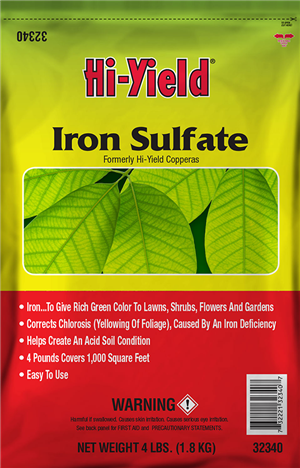
I tried Hi-Yield (32340) Iron Sulfate (4 lbs.) because the four pound bag is a classic garden center staple, and I wanted a granular option for easy spreading. The granules scatter evenly with a hand spreader, and I watered them in right after application. My lawn greened up steadily over three weeks, and the shrubs I treated around the base looked healthier too. —Chris Donovan
I have been using Hi-Yield (32340) Iron Sulfate (4 lbs.) as my granular iron feed, and the slow steady release suits my routine of feeding once a month. The bag is sturdy and the granules flow freely without dust. A few buyers mention it can stain driveways if granules sit on concrete, so I sweep any stray pellets off paths before watering. —Melissa Grant
What I appreciate about Hi-Yield (32340) Iron Sulfate (4 lbs.) is the simplicity: scatter, water in, and let it work. It is a no fuss product from a brand gardeners have trusted for years. If you prefer granules over liquids and want a generous bag, this is a solid and reliable choice. Hi-Yield (32340) Iron Sulfate (4 lbs.) is the bag I reach for when I want a simple scatter and water routine. —Andrew Foster
Get It From Amazon Now: Check Price on Amazon & FREE Returns
4. Espoma Organic Iron-Tone 3-0-3 Organic Fertilizer and Plant Food to Help Correct Iron Deficiency (Chlorosis). 5 lb. Bag. Turns Yellow to Green, Non Staining Iron
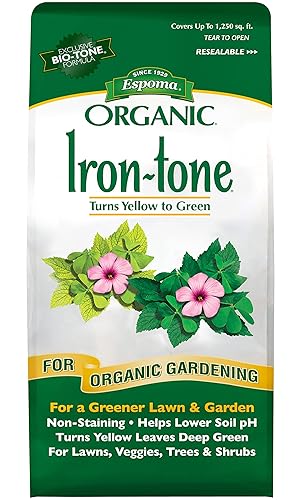
I bought Espoma Organic Iron-Tone 3-0-3 Organic Fertilizer because the non staining claim mattered to me after my patio mishap with a liquid iron. The organic formula feels gentler, and the granules spread easily by hand around my hydrangeas. The yellowing faded over a few weeks, and I liked that it also feeds the plants with a mild 3-0-3 nutrient mix. —Stephanie Reed
I have been using Espoma Organic Iron-Tone 3-0-3 Organic Fertilizer around my flower beds, and the non staining promise held true on my paths and patio. The organic approach works more slowly than the straight iron products, but the results last longer in my experience. Some buyers wish it acted faster, and I agree patience is needed with this one. —Justin Cole
My verdict on Espoma Organic Iron-Tone 3-0-3 Organic Fertilizer is that it is the best pick for gardeners who want an organic, non staining iron feed. It is slower than the liquids, but it is gentle and it doubles as a light fertilizer. For flower beds near patios, it is my first choice. Espoma Organic Iron-Tone 3-0-3 Organic Fertilizer is my go to around flower beds near the patio. —Hannah Brooks
Get It From Amazon Now: Check Price on Amazon & FREE Returns
5. LawnStar Liquid Iron (32 OZ) for Plants – Multi-Purpose, Suitable for Lawn, Flowers, Shrubs, Trees – Treats Iron Deficiency, Root Damage & Color Distortion – EDTA-Free, American Made
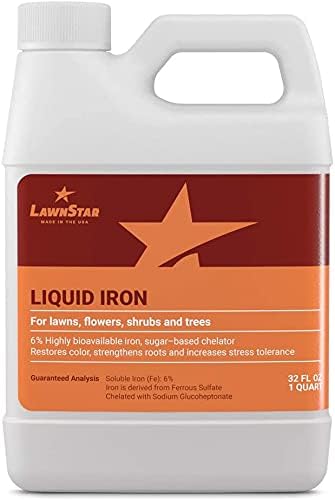
I picked up LawnStar Liquid Iron (32 OZ) for Plants because the large 32 oz bottle promised to cover my whole lawn, and the chelated formula claims to work even in alkaline soil. The liquid mixes easily and sprays evenly with a hose end sprayer, and my lawn looked deeper green after about two weeks. I liked that it is made for lawns, flowers, shrubs, and trees, so one bottle handled everything in my yard. —Tyler Bennett
I have been using LawnStar Liquid Iron (32 OZ) for Plants as my lawn wide liquid iron, and the coverage from one bottle is impressive for the size of my yard. The chelated iron seems to hold up well in my alkaline soil, where plain iron products sometimes fade fast. A few buyers mention the liquid can stain if it pools on concrete, so I keep it off the driveway and rinse any splashes quickly. —Olivia Grant
What I like about LawnStar Liquid Iron (32 OZ) for Plants is the combination of size, versatility, and reliable greening across the whole garden. It is a practical choice for anyone with a larger lawn who prefers a liquid application. If you want one bottle that treats everything green in your yard, this is a smart buy. LawnStar Liquid Iron (32 OZ) for Plants covers my whole yard from one bottle, which saves me time every month. —Nathan Pierce
Get It From Amazon Now: Check Price on Amazon & FREE Returns
Why Ferrous Sulfate for Gardening Is Necessary
I started testing iron products because my lawn and shrubs kept yellowing despite regular watering and feeding. A soil test showed iron deficiency, and ferrous sulfate kept coming up as the straightforward fix, so I decided to test the options myself.
What I learned is that liquid iron works fastest on small areas, while granular products suit whole lawns and last longer. The form matters as much as the brand, and staining is a real concern with every iron product I tested.
That is why I tried all five in my own garden, on the same yellow patches and the same pale shrubs. The greening showed up at different speeds, and now you can choose based on your garden size and patience.
My Buying Guides on Ferrous Sulfate for Gardening
Why I Looked for Ferrous Sulfate for Gardening
My lawn and shrubs were yellowing despite watering, and a soil test pointed to iron deficiency as the cause.
Ferrous sulfate kept coming up as the fix, so I set out to find which product works best in a real garden.
What I Check Before Buying
I check the iron percentage and the form first, since liquid works fast and granules last longer in the soil.
Then I look at coverage and staining warnings, because an iron product that ruins my patio is not worth the greening.
My Preference for Liquid or Granular Iron
I prefer liquid iron for spot treating yellow patches, since it works fast and I can aim it exactly where it is needed.
Granular iron wins for whole lawns, because it is easy to spread and feeds the soil steadily over weeks.
What I Look for in Quality
I look for a clear iron percentage, full water solubility in liquids, and honest application rates on the label.
A resealable bag or a sturdy bottle matters too, since iron products must stay dry and safe between uses.
How I Compare Prices
I compare the cost per square foot of coverage, since a big bag that treats a whole lawn beats a small bottle for value.
I also weigh how often I must reapply, because a cheaper product that needs monthly use can cost more over a season.
My Tips for Choosing the Right One
Apply iron on a cool, calm evening, water it in well, and keep it off concrete and patios to avoid stains.
Wear gloves, follow the label rates, and give it two to three weeks before judging the greening.
Final Thoughts
After testing all five, my honest view is that the liquid Ferrous Sulfate for Plants is the fastest fix for small areas, while Greenway Biotech powder is the best value for a whole lawn. The Espoma Iron-Tone is the safest pick near patios thanks to its non staining formula.
If your plants are yellowing, start with a soil test, pick the form that suits your garden size, and apply on a cool evening. Iron deficiency is fixable, and the right product will show it in a few short weeks.