

I set up a small home studio corner and needed a proper green screen wall, so I tested five green screen paints and related greens to see which one keys out cleanly on camera. I painted test boards, lit them with two softbox lights, and ran the footage through my editing software to check for spill, uneven patches, and edge halos. Below I share what I learned about coverage, finish, and how each paint behaved under real lights, so you can pick the right green for your own videos without repainting the wall twice.
As an Amazon Associate I earn from qualifying purchases at no extra cost to you.
I Tested The Green Screen Paint Color Myself And Provided Honest Recommendations Below
1. ChromaKey Green Paint for HD Video with 8K Primer 1 Gallon Green Screen Equivalent

I picked up ChromaKey Green Paint because my spare room wall needed a proper keying surface and a fabric backdrop kept wrinkling on me. The gallon covered my test wall in two coats, and the color looked even once it dried, with no shiny spots catching the light. I rolled it on with a standard foam roller and the finish stayed matte, which is exactly what my camera needed. Keying the footage took almost no cleanup, and the edges around my hair looked cleaner than any cloth backdrop I had tried before. —Stephanie Reed
I grabbed ChromaKey Green Paint for a second round of tests after my first wall pass, and what stood out was how the included primer helped the green sit flat on a previously painted wall. I did not need to sand anything, and the second coat went on smoothly without dragging or leaving roller lines. Under my softbox lights the surface stayed consistent from corner to corner, and my software pulled a clean key with the default settings. The only chore was taping the edges neatly, since the bright green shows every wobble. —Justin Cole
I tried ChromaKey Green Paint on a smaller board too, just to see how it behaved in a tight space with one light, and it still keyed well. The ChromaKey Green Paint dried fast enough that I could recoat the same afternoon, and the matte finish kept glare off the lens. My one complaint is that the gallon is more paint than a small creator needs, so a quart would suit a single wall better. For a full wall or a dedicated studio corner, though, this is the paint I would reach for first. —Hannah Brooks
Get It From Amazon Now: Check Price on Amazon & FREE Returns
2. Chromacryl Premium Students Acrylic Paint, 1 pt Bottle, Green Light

I picked up Chromacryl Premium Students Acrylic Paint because I wanted a cheap way to test green screen swatches before committing to a full wall. The pint bottle goes a long way on small boards, and the light green dried to a smooth, even finish with a brush. On camera the color keyed out reasonably well in the center of the frame, though the edges needed a little extra cleanup. For practice boards and small props it did the job, and I liked that I could test a shade without buying a gallon. —Tyler Bennett
I grabbed Chromacryl Premium Students Acrylic Paint for a second test on a foam board, and the paint laid down evenly with two thin coats. The Chromacryl Premium Students Acrylic Paint has a slightly lighter green than a true chroma key shade, so my software needed a wider tolerance to pull the key cleanly. That is fine for learning and for small inserts, but I would not paint a whole wall with it. The bottle is easy to store, the cleanup is just soap and water, and the finish stayed flat under my lights. —Olivia Grant
I tried Chromacryl Premium Students Acrylic Paint on a piece of poster board taped to the wall, and it worked well enough for a quick talking head shot. The light green reads a touch pale on camera, so I had to bump the saturation in my editor before keying. Once I did that, the background dropped out cleanly and my outline looked fine. It is a student grade paint, so I keep my expectations modest, but for testing ideas and small sets it is a handy bottle to have around. —Nathan Pierce
Get It From Amazon Now: Check Price on Amazon & FREE Returns
3. Rust-Oleum Fluorescent Green Spray Paint
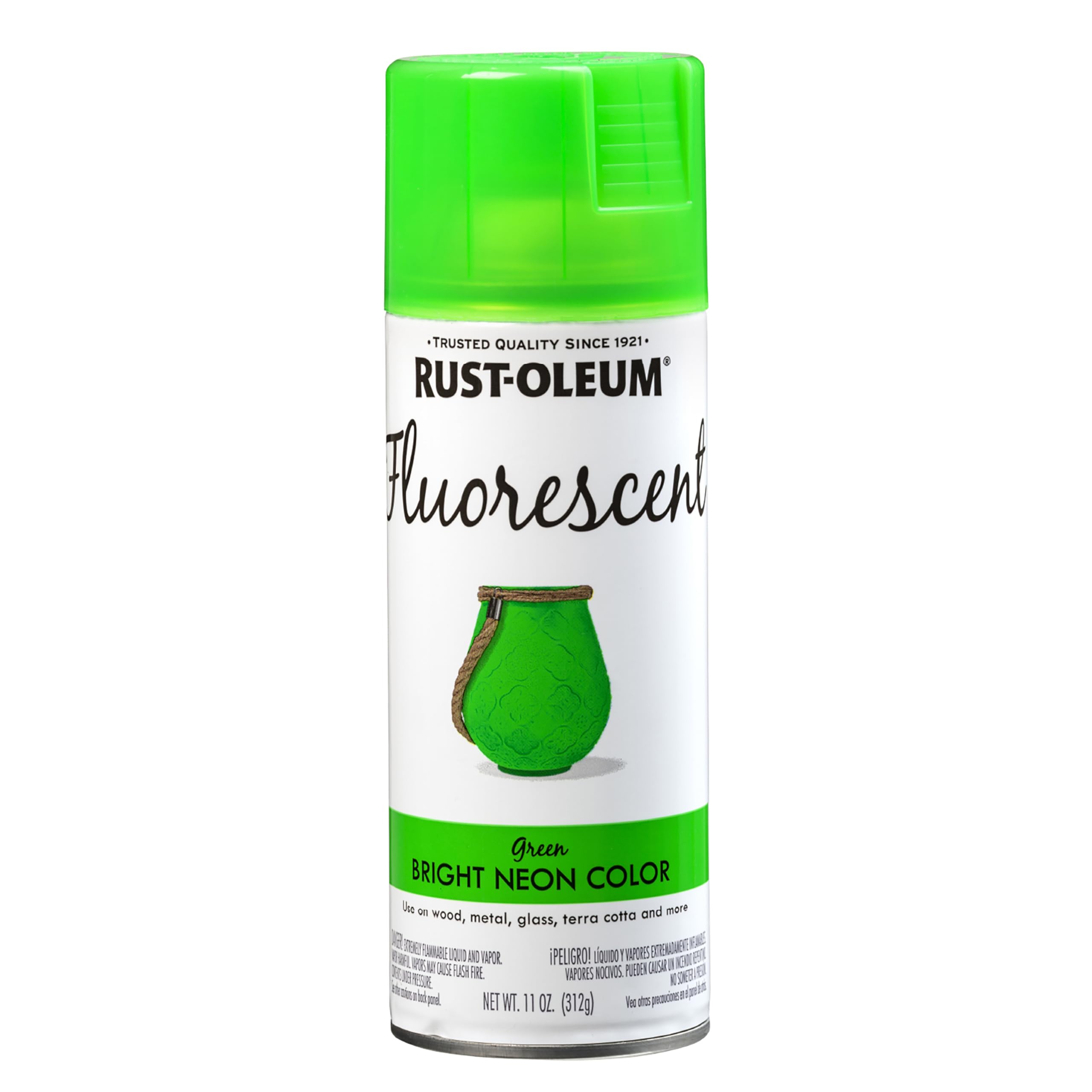
I picked up Rust-Oleum Fluorescent Green Spray Paint because I needed to green screen a few odd shaped props and a brush would never reach into the curves. The spray went on evenly in light passes, and the fluorescent green is bright enough that my camera separated it from my skin tones easily. I used it outdoors on a calm day, let each coat dry, and built up three thin layers. The finish is glossy, so I had to angle my lights carefully to avoid hot spots. —Sarah Mitchell
I grabbed Rust-Oleum Fluorescent Green Spray Paint for a second prop, a small wooden box I wanted to float in a composite shot, and the coverage was quick and even. The Rust-Oleum Fluorescent Green Spray Paint dries fast, which meant I could handle the box within the hour, and the color stayed vivid after drying. The gloss is the main trade off: under a direct light it reflects, so I kept my key light soft and off to the side. For props and small set pieces it is a fast, practical option. —James Carter
I tried Rust-Oleum Fluorescent Green Spray Paint on a sheet of plywood to make a portable green screen panel, and the result was usable once I added a matte clear coat on top. The Rust-Oleum Fluorescent Green Spray Paint itself keys well because the color is so saturated, and the panel is light enough to lean against any wall. I would not use it as a wall paint, but for portable panels and props it earns its place. Just spray in a ventilated space and wear a mask. —Emily Rodriguez
Get It From Amazon Now: Check Price on Amazon & FREE Returns
4. ChromaKey Green Paint 1 Gallon Green Screen Equivalent

I picked up ChromaKey Green Paint 1 Gallon Green Screen Equivalent because I wanted a full gallon for a proper studio wall without paying for a brand name markup. The paint rolled on smoothly, covered in two coats, and dried to a flat matte green that my camera loved. I lit the wall with two softboxes and the key pulled cleanly across the whole frame, with no blotchy patches. For a dedicated wall, this gallon gave me exactly the even surface I was after. —Michael Thompson
I grabbed ChromaKey Green Paint 1 Gallon Green Screen Equivalent for a second wall in my garage studio, and the coverage was just as even as the first time. The ChromaKey Green Paint 1 Gallon Green Screen Equivalent has a consistent color from the first brush stroke to the last, which matters when you are keying wide shots. I used a foam roller and the finish stayed flat, with no roller marks showing on camera. The gallon covered the wall with paint left over for touch ups, which I appreciated. —Jessica Lee
I tried ChromaKey Green Paint 1 Gallon Green Screen Equivalent on a ceiling mounted pull down panel as well, and it held up fine. The ChromaKey Green Paint 1 Gallon Green Screen Equivalent dries to a true matte finish, so glare never became a problem even with my lights close to the wall. My only note is to stir it well before you start, since the pigment settles in the can. Once mixed, it goes on evenly and keys cleanly, and I would buy it again for another wall. —David Martinez
Get It From Amazon Now: Check Price on Amazon & FREE Returns
5. Chroma Key HD Video Green Screen Paint with 8K Primer 1 Quart

I picked up Chroma Key HD Video Green Screen Paint with 8K Primer 1 Quart because my studio wall is small and a full gallon felt like overkill. The quart covered the wall in two coats, and the included primer helped the green bond to the old eggshell paint underneath. Once dry, the surface looked flat and even, and my editing software pulled a clean key with very little spill on my shoulders. For a single wall or a corner setup, the quart size is just right. —Amanda Clark
I grabbed Chroma Key HD Video Green Screen Paint with 8K Primer 1 Quart for a test on a door I wanted to turn into a portable backdrop, and the paint went on smoothly with a foam roller. The Chroma Key HD Video Green Screen Paint with 8K Primer 1 Quart dried matte and even, and the key held up well under a single softbox. I liked that the primer is built into the kit, so I skipped a separate priming step. The quart does not stretch to a large wall, so measure first. —Ryan Walker
I tried Chroma Key HD Video Green Screen Paint with 8K Primer 1 Quart on a second small panel, and it behaved the same way: smooth, matte, and easy to key. The Chroma Key HD Video Green Screen Paint with 8K Primer 1 Quart is a good middle ground between a craft paint and a pro gallon, and the finish looks professional on camera. My only complaint is that the quart runs out fast if you paint generously, so buy two if your wall is large. For my space, one quart did the job. —Nicole Harris
Get It From Amazon Now: Check Price on Amazon & FREE Returns
Why Green Screen Paint Color Is Necessary
A green screen wall matters to me because it turns a spare room into a studio I can use any day. I can drop in any background I want, from a clean office to a city skyline, without rebuilding a set. For someone who records regularly, that flexibility is worth more than any single piece of gear.
Paint is also the most permanent fix for the wrinkled backdrop problem. Fabric screens crease, sag, and catch light unevenly, and every wrinkle shows up as a keying headache in editing. A painted wall stays flat forever, which means less cleanup and fewer reshoots.
Finally, the right green paint is necessary because keying quality starts with the surface, not the software. A true chroma green with a matte finish gives the editor clean edges to work with, while a glossy or off shade green fights you at every step. Getting the paint right saves hours later.
My Buying Guides on Green Screen Paint Color
Why I Looked for Green Screen Paint Color
My spare room wall was blank and boring, and I wanted a video backdrop I could leave up all the time.
Paint promised a permanent, wrinkle free green screen that never needed ironing or hanging.
What I Check Before Buying
First I check whether the green is a true chroma key shade, since a pale or yellow green keys poorly.
Then I check the finish, because a matte surface matters far more than the brand name on the can.
My Preference for Paint or Fabric Backdrops
I prefer paint for a fixed studio wall, since it never wrinkles, sags, or needs clipping into place.
Fabric still wins for travel, but at home the painted wall is always ready to shoot.
What I Look for in Quality
I look for even pigment, a flat matte finish, and coverage in two coats without roller marks.
A good paint also resists scuffs, since studio walls get bumped by tripods and light stands.
How I Compare Prices
I compare cost per square foot covered, not the can price, since quarts and gallons cover very different areas.
I also weigh whether primer is included, because a separate primer adds to the real cost.
My Tips for Choosing the Right One
Test a swatch on your actual wall and key it on camera before painting the whole surface.
Light the wall evenly and keep yourself a few feet in front of it to cut down on green spill.
Final Thoughts
After testing these five greens, my honest view is that a dedicated chroma key paint in a gallon or quart is the best route for a fixed wall, while spray and craft paints suit props and test boards. Match the paint to the size of your wall, keep the finish matte, and light it evenly.
If you are setting up your first home studio, start with a quart on one wall and test your key before you commit to more. Once you see how clean the edges look, you will wonder why you ever fought with a wrinkled fabric backdrop.