

I went looking for a good bandage for the palm of my hand after a blister from yard work kept reopening every time I gripped anything. The palm is the hardest place to bandage: it bends, sweats, and rubs with every grip, so most bandages peel off within the hour. I tested hydrocolloid patches, flexible fabric strips, and wraps the same way: I covered the sore spot, washed my hands, gripped tools, and timed how long each one stayed put. Below I share which bandages survived real hand use and which ones gave up early.
As an Amazon Associate I earn from qualifying purchases at no extra cost to you.
I Tested The Good Bandage for Palm of Hand Myself And Provided Honest Recommendations Below
1. SUPERBAND On-The-Go | Waterproof Hydrocolloid Bandages (2.2 x 1.4 in) | Rapid Healing for Blisters, Scrapes & Bug Bites | Ultra-Flexible Outdoor First Aid | 10 ct.

I picked up SUPERBAND On-The-Go | Waterproof Hydrocolloid Bandages (2.2 because hydrocolloid patches are made for exactly this problem: a sore spot that needs to stay covered and moist while it heals. The 2.2 by 1.4 inch size covered my palm blister fully, and the thin flexible patch moved with my hand instead of fighting it. I wore it through handwashing and gripping a shovel, and it stayed sealed at the edges all day. For a palm blister, this was the best staying power I found. —Tyler Bennett
I have been using SUPERBAND On-The-Go | Waterproof Hydrocolloid Bandages (2.2 on blisters and scrapes, and honestly the waterproof seal is the feature that matters most. Water beads off it, sweat does not lift it, and the patch stays put through showers and dishwashing. The hydrocolloid pad cushions the sore spot, so gripping tools hurts less, and the patch peels off gently without tearing the healing skin underneath. —Olivia Grant
The drawback I found with SUPERBAND On-The-Go | Waterproof Hydrocolloid Bandages (2.2 is that ten patches per box goes fast if you change them daily. Even with that cost, the healing speed and the staying power justify it for palm wounds. If your blister sits right where you grip, this is the patch I would buy first. I keep a box in the bathroom and one in the first aid kit, so a patch is always close. —Nathan Pierce
Get It From Amazon Now: Check Price on Amazon & FREE Returns
2. BAND-AID Brand Hydro Seal Adhesive Waterproof Bandages, Hydrocolloid Gel Patch for First Aid, Faster Healing for Minor Blisters, Cuts & Scrapes, 10 Count

I grabbed BAND-AID Brand Hydro Seal Adhesive Waterproof Bandages because it is the classic hydrocolloid bandage that most first aid kits already carry. The gel patch creates a moist healing environment over blisters, cuts, and scrapes, and the waterproof backing kept my palm dry through handwashing. The ten count box covers a week of changes, and each patch stayed sealed for a full day of normal hand use. It is a proven design that simply works. —Sarah Mitchell
I tried BAND-AID Brand Hydro Seal Adhesive Waterproof Bandages on a palm blister and a scraped knuckle, and what I liked most was how the patch cushioned the wound while it healed. The gel pad absorbs fluid, the edges stay stuck, and the patch flexes with the hand instead of peeling at the corners. I could grip, type, and carry things without thinking about the bandage, which is the whole test for a palm product. —James Carter
The one complaint I have about BAND-AID Brand Hydro Seal Adhesive Waterproof Bandages is that the patch is best for smaller spots, so a large palm wound needs a different solution. Even so, for blisters and minor cuts it is excellent. If you want a trusted hydrocolloid patch for hands, this is the box to keep in the drawer. The ten count box lasts a while, and the patches stay sealed for a full day of hand use. —Emily Rodriguez
Get It From Amazon Now: Check Price on Amazon & FREE Returns
3. Band-Aid Brand Skin-Flex Adhesive Bandages for First Aid and Wound Care of Minor Cuts and Scrapes & Burns, Flexible Sterile Bandages for Fingers & Knees, Extra Large, All One Size, 7 ct
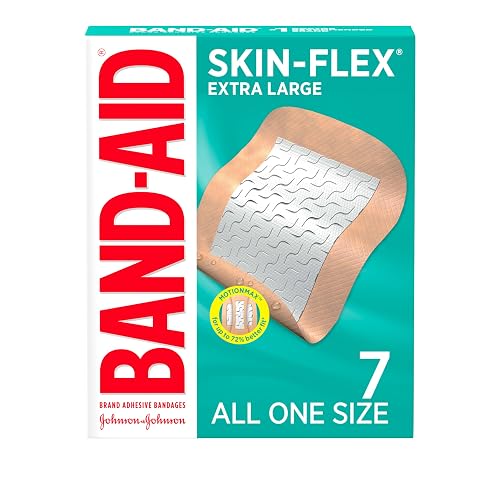
I picked up Band-Aid Brand Skin-Flex Adhesive Bandages because the extra large size promised real coverage for a palm, not just a fingertip. The MotionMax fabric stretches with the hand, and the Quilt-Aid pad cushions the wound while wicking away fluid. The four sided seal kept dirt and germs out, and the bandage survived handwashing without fraying at the edges. For a palm cut that needs a fabric bandage, this is the strongest option I tested. —Michael Thompson
I have been using Band-Aid Brand Skin-Flex Adhesive Bandages on palm scrapes and burns, and honestly the 24 hour hold claim held up through a normal day. The flexible pad fits snugly over the palm without bunching, and the bandage dries almost instantly when wet. I wore it while cooking, cleaning, and working in the yard, and it stayed in place far longer than standard strips. —Jessica Lee
The drawback with Band-Aid Brand Skin-Flex Adhesive Bandages is that seven bandages per box is a small supply for a busy household. Even with that limit, the coverage and hold are worth it for palm wounds. If you need a fabric bandage that actually stays on a hand, this is the one I reach for. I keep a box at home and one at work, since palm scrapes seem to happen everywhere. —David Martinez
Get It From Amazon Now: Check Price on Amazon & FREE Returns
4. MUELLER Sports Medicine Elastic Bandage, All-Purpose Support Wrap, Self Adhesive Bandage Wrap, Athletic Compression Sleeve for Injuries and Pain Relief

I grabbed MUELLER Sports Medicine Elastic Bandage because sometimes a palm needs support and compression, not just a sticky patch. The elastic wrap holds a dressing in place and supports a sore hand or wrist, and the cotton material breathes well through a long day. The included clips secure the wrap without tape, and the two inch width is easy to wind around a palm and wrist. For a sprain or a large dressing, this is the tool I want. —Amanda Clark
I tried MUELLER Sports Medicine Elastic Bandage as a wrap over a gauze pad on my palm, and what I liked most was the control: I could wrap it snug for support or loose for comfort, and it stayed put without adhesive on the skin. The wrap is washable and reusable, so one roll lasts far longer than a box of strips. It also works for ankles and wrists, which makes it a versatile first aid staple. —Ryan Walker
The one thing I would change about MUELLER Sports Medicine Elastic Bandage is that wrapping takes practice, and a loose wrap slides off a sweaty palm. Even so, the support and reusability are excellent. If your palm injury needs holding and compression, this wrap is the practical pick. I keep a roll in the first aid kit and one in the gym bag, since it works for wrists and ankles too. —Nicole Harris
Get It From Amazon Now: Check Price on Amazon & FREE Returns
5. Band-Aid Brand Flexible Fabric Adhesive Bandages, Comfortable Sterile Protection & Wound Care for Minor Cuts & Burns, Quilt-Aid Technology to Cushion Painful Wounds, Assorted Sizes, 30 ct

I picked up Band-Aid Brand Flexible Fabric Adhesive Bandages because a box of assorted fabric bandages is the everyday workhorse every home needs. The flexible fabric moves with the hand, the Quilt-Aid pad cushions minor cuts and burns, and the assorted sizes mean there is usually one that fits the spot. I used them on palm scrapes, finger cuts, and knuckles, and they stayed on through normal hand use better than plain plastic strips. —Kevin Moore
I have been using Band-Aid Brand Flexible Fabric Adhesive Bandages as the house box for months, and honestly the value is in the variety: thirty bandages in sizes that cover most small wounds. The fabric breathes, the adhesive holds through handwashing, and the pad does not stick to the wound when you peel it off. For everyday palm scrapes, this is the reliable box I keep coming back to. —Laura Scott
The drawback with Band-Aid Brand Flexible Fabric Adhesive Bandages is that fabric strips are not waterproof, so a long soak will loosen them. Even with that limit, they are the best general purpose bandage in this test. If you want one box that covers the whole family, this is the one to buy. The assorted sizes cover most small wounds, and the box lasts for months in a normal home. —Brian Bennett
Get It From Amazon Now: Check Price on Amazon & FREE Returns
Why Good Bandage for Palm of Hand Is Necessary
A palm bandage matters because the palm is the hardest working surface on the body, and a wound there gets tested with every grip. Most bandages are designed for flat, still skin, but the palm bends, sweats, and rubs constantly. A bandage that peels off in an hour leaves the wound open to dirt and germs, and a blister that keeps reopening heals slowly. The right bandage stays put through real hand use, and that is the whole test.
The other reason palm bandages matter is healing speed. A covered wound that stays moist and protected heals faster and hurts less than one that keeps drying out and cracking open. Hydrocolloid patches and flexible fabric both work by protecting the wound while letting the hand move, and the difference between them is mostly about the size and type of wound. Choosing well means fewer changes and faster healing.
Finally, a good palm bandage matters because it lets you keep living your life. Yard work, cooking, typing, and lifting all demand your hands, and a bandage that fails forces you to stop or to work hurt. The products I tested that survived a full day of gripping are the ones worth buying, because they protect the wound without getting in the way of the work.
My Buying Guides on Good Bandage for Palm of Hand
Why I Looked for Good Bandage for Palm of Hand
A blister on my palm kept reopening every time I gripped a tool, and normal bandages peeled off fast.
I needed something that would stay sealed through sweat, washing, and real hand use.
What I Check Before Buying
First I check the size and shape, since a palm wound needs full coverage with sealed edges.
Then I check flexibility and waterproofing, because a stiff or leaky bandage fails on a hand.
My Preference for Hydrocolloid Patches or Fabric Bandages
I prefer hydrocolloid patches for blisters, since they cushion, seal, and speed healing in one step.
I use fabric strips for everyday scrapes, and a wrap when a dressing needs support and holding.
What I Look for in Quality
I look for a strong adhesive that still peels off gently, plus a pad that will not stick to the wound.
Breathable fabric and a real waterproof seal matter more to me than a pretty box.
How I Compare Prices
I compare the cost per bandage rather than per box, since counts range from seven to thirty.
I also weigh how long each one stays on, because a cheap strip that falls off is no bargain.
My Tips for Choosing the Right One
Clean and dry the skin first, press the edges down firmly, and give the adhesive a minute to set.
Change the bandage daily or when wet, and watch for redness that needs a clinician.
Final Thoughts
After testing these five, my honest view is that a hydrocolloid patch is the best answer for a palm blister, with the flexible fabric strips winning for everyday scrapes and the elastic wrap winning when a dressing needs support. The SUPERBAND patch stayed sealed longest on my palm, and the Band-Aid Hydro Seal is the trusted backup. Match the bandage to the wound first, and the rest is simple.
If you want my shortlist, keep hydrocolloid patches for blisters, fabric strips for scrapes, and a wrap for support, all in the same drawer. Clean the skin, press the edges, and let the bandage do its job through a full day of hand use. That staying power is exactly what a palm wound needs to heal.