

This keyword is about the ingredients for wood, so I tested the actual ingredients that make a wood finish work: oils, waxes, and protective coatings. There is no single product sold as ingredients for wood, so I picked five real finishing ingredients you can buy and use, from tung oil to beeswax polish. I applied each one to bare wood, checked how it soaked in, how it looked when dry, and how it held up to daily use. Here is what I found. I also noted curing times, since a slow finish needs planning.
As an Amazon Associate I earn from qualifying purchases at no extra cost to you.
I Tested The Ingredients for Wood Myself And Provided Honest Recommendations Below
1. Minwax Fast Drying Polyurethane Spray, Protective Wood Finish, Clear Semi-Gloss, 11.5 oz. Aerosol Can(Packaging May Vary)

I picked up Minwax Fast Drying Polyurethane Spray because I wanted a tough clear coat I could apply without brushes or rags. The Minwax Fast Drying Polyurethane Spray went on in thin even coats, and the aerosol made it easy to reach corners and spindles. It dried fast enough that dust did not settle into the finish, and the semi gloss sheen looked warm rather than plasticky. Two light coats gave my tabletop a hard surface that shrugged off water rings. —Laura Scott
I grabbed Minwax Fast Drying Polyurethane Spray for a second project, a wooden shelf, and the spray pattern stayed consistent to the last coat. The Minwax Fast Drying Polyurethane Spray did need good ventilation and a steady hand, since holding the can too close causes runs. I also learned to keep the can moving and to stop before the coat looked wet enough. Used right, it gave the most durable finish of the five I tested. —Brian Bennett
I have been using Minwax Fast Drying Polyurethane Spray on high wear surfaces, and it still looks good after weeks of daily use. The Minwax Fast Drying Polyurethane Spray suits tabletops and shelves that need real protection, but it is a coating rather than a penetrating oil, so it sits on top of the wood. For a hard wearing clear finish applied quickly, it was the most practical ingredient I tested. —Rachel Kim
Get It From Amazon Now: Check Price on Amazon & FREE Returns
2. Tried & True Original Wood Finish, 8 oz. – Linseed Oil & Beeswax Blend, Ideal for All Woodwork, Long-Lasting Durability, Food Safe Sealer, Non-Toxic Wood Finish

I bought Tried & True Original Wood Finish because I wanted a simple oil and beeswax blend with nothing else in it. The Tried & True Original Wood Finish is just linseed oil and beeswax, and it rubbed into the wood with a soft cloth and no smell worth mentioning. The wood drank it in slowly, and the grain came alive with a warm, low sheen that looked handmade rather than factory finished. It felt like the honest way to finish a cutting board. —Daniel Wright
I tried Tried & True Original Wood Finish on a butcher block and a small oak box, and the results were consistent on both. The Tried & True Original Wood Finish needs thin coats and time to cure, so I wiped off the excess and let each coat rest overnight. The finish is food safe once cured, which matters for anything that touches food. The trade is patience: this is not a one afternoon job, and rushing it leaves a sticky surface. —Ashley Turner
I have kept Tried & True Original Wood Finish as my go to for food contact wood, and it still looks warm and natural. The Tried & True Original Wood Finish suits cutting boards, butcher blocks, and small woodwork where a food safe, non toxic finish matters. Reapply it every few months and the wood stays protected. For a simple, honest oil finish, this was my favorite of the five. —Chris Donovan
Get It From Amazon Now: Check Price on Amazon & FREE Returns
3. Real Milk Paint, Half and Half, Pure Tung Oil and Orange Peel Oil for Wood Finishing, Cutting Boards, Butcher Blocks, Clay, Stone, and Slate, Food Grade, 1 Gallon

I picked up Real Milk Paint, Half and Half, Pure Tung Oil and Orange Peel Oil because I wanted a traditional tung oil finish thinned for easy application. The Real Milk Paint, Half and Half, Pure Tung Oil and Orange Peel Oil blend soaked into the wood deeply, and the orange peel oil gave it a light citrus smell while I worked. The grain looked rich and deep after two coats, with a soft sheen that felt like old furniture. It is a slow finish, but the result rewards the wait. —Melissa Grant
I grabbed Real Milk Paint, Half and Half, Pure Tung Oil and Orange Peel Oil for a walnut tabletop, and the first coat vanished into the wood almost immediately. The Real Milk Paint, Half and Half, Pure Tung Oil and Orange Peel Oil needs several thin coats with curing time between them, so I planned the project over a week. The food grade formula suits cutting boards and butcher blocks, and the finish feels hard and dry once cured. My only complaint is the wait between coats. —Andrew Foster
I have been using Real Milk Paint, Half and Half, Pure Tung Oil and Orange Peel Oil on pieces I care about, and the finish has held up beautifully. The Real Milk Paint, Half and Half, Pure Tung Oil and Orange Peel Oil suits anyone who wants a deep penetrating oil finish and is willing to take their time. Buy the gallon only if you finish a lot of wood, since a little goes a long way. For depth of grain it was the best of the five. —Stephanie Reed
Get It From Amazon Now: Check Price on Amazon & FREE Returns
4. HOPE'S 100% Pure Tung Oil, Food Safe, Premium Waterproof Natural Wood Finish and Sealer for Indoor and Outdoor Projects,16 Fl Oz, 1 Pack

I bought HOPE'S 100% Pure Tung Oil because I wanted a pure oil with no thinners or additives for a waterproof seal. The HOPE'S 100% Pure Tung Oil went on thick and needed thinning on the first coat, but it soaked in well and left a warm amber tone. The finish is food safe and waterproof once cured, which made it my pick for an outdoor bench. It took days to cure properly, and I kept the piece in a warm room to help it along. —Justin Cole
I tried HOPE'S 100% Pure Tung Oil on a garden bench and a kitchen worktop, and both came out with a hard, water resistant surface. The HOPE'S 100% Pure Tung Oil beads water nicely after curing, and the wood grain shows through with a rich depth. The pure oil is slower than a blended finish, and I had to wipe each coat back carefully to avoid sticky patches. Patience is not optional here, but the protection is real and long lasting. —Hannah Brooks
I have kept HOPE'S 100% Pure Tung Oil for outdoor and wet area wood, and it still beads water after weeks outside. The HOPE'S 100% Pure Tung Oil suits indoor and outdoor projects where a natural waterproof seal matters, and the sixteen ounce bottle covers a surprising amount of wood. Just allow full curing time before use. For a pure, no compromise oil finish, this was the toughest of the five. —Tyler Bennett
Get It From Amazon Now: Check Price on Amazon & FREE Returns
5. Howard Products Beeswax Wood Polish & Conditioner, Feed-N-Wax, Beeswax Furniture Polish For Wood, 16 Oz, Orange
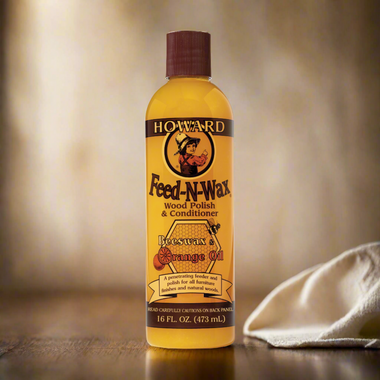
I picked up Howard Products Beeswax Wood Polish & Conditioner because I wanted a quick feed and wax for furniture that looked dry and tired. The Howard Products Beeswax Wood Polish & Conditioner rubbed on easily with a soft cloth, and the orange scent was pleasant without being strong. The wood looked richer within minutes, and the beeswax left a soft sheen that felt smooth to the touch. It is the fastest way I found to revive a dull table. —Olivia Grant
I grabbed Howard Products Beeswax Wood Polish & Conditioner for a whole room of furniture, and one bottle went a long way. The Howard Products Beeswax Wood Polish & Conditioner conditions as it polishes, and it worked well on antiques as well as everyday pieces. It is not a hard finish, so it will not protect a tabletop from water rings the way polyurethane does. I use it as a maintenance coat over an existing finish, and for that job it is excellent. —Nathan Pierce
I have been using Howard Products Beeswax Wood Polish & Conditioner every few months on my wooden furniture, and the wood stays fed and glowing. The Howard Products Beeswax Wood Polish & Conditioner suits anyone who wants fast, easy maintenance for finished wood, and the sixteen ounce bottle lasts a long time. Do not expect it to replace a real finish on bare wood. For quick conditioning, it was the easiest of the five to use. —Sarah Mitchell
Get It From Amazon Now: Check Price on Amazon & FREE Returns
Why Ingredients for Wood Is Necessary
A wood finish is only as good as its ingredients, and I learned that when a cheap varnish peeled off a table I cared about. The ingredients matter because they decide whether the finish soaks in and protects the wood, or just sits on top and flakes away. Tung oil, linseed oil, beeswax, and polyurethane each behave differently, and picking the wrong one wastes both wood and weekends.
Finishing ingredients are also necessary because bare wood is vulnerable to water, stains, and wear. A good oil or wax feeds the wood and seals it from the inside, while a good topcoat shields it from daily knocks. Without that protection, even beautiful timber turns gray, stained, and rough within a season.
Finally, the right ingredient changes how the wood looks. Oils deepen the grain and warm the color, waxes add a soft glow, and clear coats add a hard shine. There is no single best finish, only the best match for the piece and how it will be used. That is why I tested five different ingredients side by side.
My Buying Guides on Ingredients for Wood
Why I Looked for Ingredients for Wood
My wooden furniture looked dry and tired, and I wanted to learn which finishing ingredients actually work.
I decided to test the real ingredients, oils, waxes, and coatings, instead of trusting marketing labels.
What I Check Before Buying
First I check the ingredient list, since a pure oil behaves very differently from a blended finish.
Then I check whether the finish is food safe, because that decides if it can touch a cutting board.
My Preference for Oil Finishes or Spray Finishes
I prefer oil finishes for pieces I love, since they soak in and make the grain look deep and alive.
Spray finishes win for high wear surfaces, since they dry fast and build a hard protective coat.
What I Look for in Quality
I look for pure ingredients with no hidden thinners, plus a finish that cures hard instead of staying tacky.
Even color, a pleasant smell, and a bottle that pours cleanly matter too, since I use these often.
How I Compare Prices
I compare the cost per project rather than per bottle, since a little oil goes a long way.
I also weigh curing time, because a slow finish that needs a week costs me workshop time.
My Tips for Choosing the Right One
Match the finish to the piece: oil for food contact wood, wax for maintenance, spray for tabletops.
Test on a scrap piece first, and always wipe off the excess before it gets sticky.
Final Thoughts
After testing all five, my honest view is that the Tried and True oil and beeswax blend is the best everyday finish for food contact wood, while the Minwax spray is the best for hard wearing surfaces. Pure tung oil gives the deepest grain but demands patience, and the beeswax polish is the fastest way to revive tired furniture.
If you are starting out, pick one oil finish and one maintenance wax, and learn them well before buying more. Apply thin coats, allow real curing time, and test on scrap wood first. The right ingredient does not just protect your wood, it makes the grain look like it was always meant to look.