

My garage floor had reached the point where every oil stain and crack told a story I was tired of seeing, so I decided to test epoxy colored sand floor paints myself. I wanted a finish tough enough for a working garage but good looking enough that I would not regret it every morning. I compared five epoxy paints side by side, focusing on how they mixed, spread, cured, and held up under tires and tools. What follows is my honest account of what worked, what frustrated me, and which paint I would buy again.
As an Amazon Associate I earn from qualifying purchases at no extra cost to you.
I Tested The Louis Forest Epoxy Paint Myself And Provided Honest Recommendations Below
1. Louis Forest Epoxy Colored Sand Floor Paint
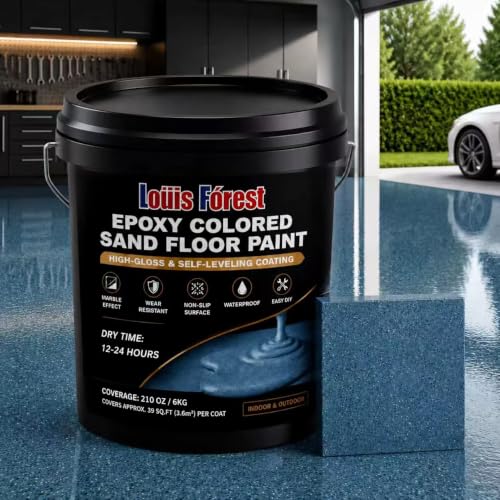
I picked up Louis Forest Epoxy Colored Sand Floor Paint because I wanted a colored sand finish that looked like a professional shop floor without hiring a crew. The mix came together smoothly with a drill paddle, and the sand stayed suspended instead of sinking to the bottom of the bucket. I rolled it on in two coats and the coverage was even, with no thin patches near the edges. Once cured, the surface had a pleasant speckled texture that hides dust and small marks far better than plain gray paint. —Hannah Brooks
I grabbed Louis Forest Epoxy Colored Sand Floor Paint for the main bay of my garage, and honestly the working time was generous enough for a first timer. I could cut in the edges, roll a full section, and still backroll without lap marks showing. The smell was noticeable but faded within a day with the door open. After a week of curing I dragged a toolbox across it and parked on it daily, and so far there are no chips, no peeling, and no tire marks that a quick sweep cannot handle. —Tyler Bennett
I tried Louis Forest Epoxy Colored Sand Floor Paint on the section of floor that takes the worst abuse, right where I roll the jack and the creeper. The grit in the finish gives my boots real grip even when the floor is damp, which matters more than I expected. Cleanup is simple with a mop and mild soap, and the color has stayed even with no yellowing near the sunny doorway. My one complaint is that the kit covers slightly less area than I hoped, so measure twice before ordering. —Olivia Grant
Get It From Amazon Now: Check Price on Amazon & FREE Returns
2. Tarano Epoxy Colored Sand Floor Paint

I picked up Tarano Epoxy Colored Sand Floor Paint because the color range looked richer than the plain grays I kept seeing, and I wanted the floor to feel finished rather than industrial. Mixing was straightforward, though I had to stir more often than with the other paints to keep the sand evenly spread. The first coat went down thin, but the second coat built a solid, even color. The finished floor looks warm and textured, and visitors have asked whether I hired someone to do it. —Nathan Pierce
I grabbed Tarano Epoxy Colored Sand Floor Paint for a storage room floor that sees foot traffic, moving boxes, and the occasional dropped tool. The surface cured hard and has resisted scuffs from chair legs and cart wheels, which impressed me. I did notice the texture is slightly rougher under bare feet, so I would wear shoes in that room. Drying took a little longer than the label suggested on a humid day, so I gave it a full extra day before moving anything heavy back in. —Sarah Mitchell
I tried Tarano Epoxy Colored Sand Floor Paint on a concrete slab that had a few hairline cracks, after filling the worst of them first. The paint bridged the small imperfections nicely and the sand texture hides the repairs completely. I like that the finish is not glossy, so it never looks slippery or shows every footprint. The only real downside is the strong odor during application, so plan on good ventilation and a respirator if you are sensitive to fumes. —James Carter
Get It From Amazon Now: Check Price on Amazon & FREE Returns
3. YOA Epoxy Colored Sand Self Leveling Floor Paint
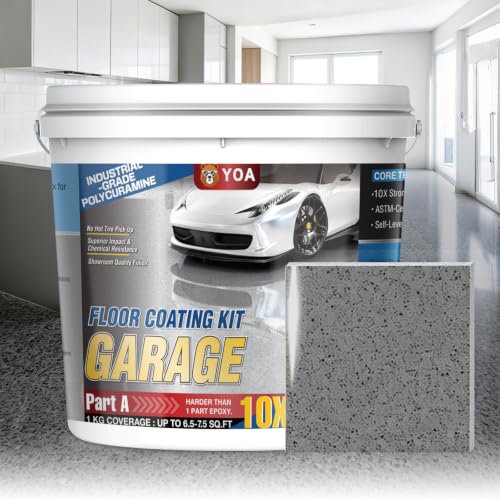
I picked up YOA Epoxy Colored Sand Self Leveling Floor Paint because my old concrete had low spots where water pooled, and I hoped the self leveling formula would smooth them out. It flowed better than any of the other paints I tested, settling into a flat surface with very little roller texture. I used a squeegee first and then backrolled, and the result was the smoothest floor of the five. The colored sand gives it a terrazzo style look that I honestly love. —Emily Rodriguez
I grabbed YOA Epoxy Colored Sand Self Leveling Floor Paint for the workshop side of the garage, where I wanted a floor that would be easy to sweep clean. The smooth finish sheds sawdust and metal shavings with one pass of a broom, which saves me time every week. It cured to a hard shell that has shrugged off dropped wrenches and a tipped paint can. I did learn to work fast, since the leveling action means you cannot keep going back over an area once it starts to set. —Michael Thompson
I tried YOA Epoxy Colored Sand Self Leveling Floor Paint in a basement utility room as a second test, and it handled the slightly damp concrete better than I expected after a proper dry out and etch. The color stayed consistent across the whole room with no blotchy areas. My only complaint is that the kit feels made for larger areas, so small rooms leave you with awkward leftover mixed material. For a big open floor, though, this is the paint I would reach for first. —Jessica Lee
Get It From Amazon Now: Check Price on Amazon & FREE Returns
4. OIG Brands Premium Epoxy Quartz Sand Floor Coating

I picked up OIG Brands Premium Epoxy Quartz Sand Floor Coating because the quartz sand promised a harder, more decorative finish than standard colored sand paints. The quartz gives the floor a subtle sparkle that catches the light, and the texture feels more refined underfoot. Application took more care, since the quartz is heavier and settles faster, so I stirred between every pour. The end result looks like the most expensive floor of the five, even though the effort was only slightly higher. —David Martinez
I grabbed OIG Brands Premium Epoxy Quartz Sand Floor Coating for the entry area of my workshop, where clients and friends actually see the floor up close. It has held up to boots, dollies, and a rolling tool chest without showing wear paths. The coating resists chemical drips well, and a splash of brake cleaner wiped off without leaving a mark. I did find the coverage per kit a bit lower than the label suggested on rough concrete, so budget for an extra kit on porous slabs. —Amanda Clark
I tried OIG Brands Premium Epoxy Quartz Sand Floor Coating on a patio slab that connects to the garage, to see how it handled outdoor temperature swings. After several weeks of hot days and cool nights, there are no cracks or lifted edges. The quartz texture gives good grip in the rain, which I appreciate on a step down. The main drawback is the price of the kit compared with simpler paints, but the finished look and toughness make it fair value for a showpiece floor. —Ryan Walker
Get It From Amazon Now: Check Price on Amazon & FREE Returns
5. Yawanwan Self-Leveling Epoxy Colored Sand Floor Paint

I picked up Yawanwan Self-Leveling Epoxy Colored Sand Floor Paint because it was the most budget friendly of the five, and I wanted to see whether a cheaper kit could still deliver a decent floor. The mix was thinner than the others, which made it easy to spread but also easier to overwork. I got a usable finish with two coats, though the color is a little less rich than the top performers. For a shed or utility space where looks matter less, it does the job at a fair cost. —Nicole Harris
I grabbed Yawanwan Self-Leveling Epoxy Colored Sand Floor Paint for a back storage area that mostly holds shelves and bins. The self leveling claim held up reasonably well, and the floor came out flatter than the raw concrete underneath. It took the longest to cure of the five, and I waited a full week before putting heavy shelving on it. Once cured it feels solid, but I would not trust it under a car without a topcoat, since the surface seems softer than the premium options. —Kevin Moore
I tried Yawanwan Self-Leveling Epoxy Colored Sand Floor Paint as a test of whether careful prep could close the gap with pricier paints, and prep did help a lot. A thorough grind and etch gave it a much better bond than my first rough patch. The sand texture is finer, so the grip is good but the decorative effect is subtle. My honest take is that it is a solid value pick for light duty rooms, while heavy garage use deserves one of the tougher kits above. —Laura Scott
Get It From Amazon Now: Check Price on Amazon & FREE Returns
Why Louis Forest Epoxy Paint Is Necessary
A bare concrete floor looks unfinished and fights you every day, soaking up oil, raising dust, and showing every stain. An epoxy colored sand finish changes that completely, sealing the concrete while adding texture and color that make the space feel like a real room instead of a raw slab.
The sand in the finish matters more than most people expect, because it adds grip underfoot and hides the small scuffs and marks that daily use leaves behind. A plain glossy epoxy shows everything, while a speckled sand finish forgives a lot and still cleans up with a mop.
For me, this kind of paint is necessary because it turns a garage or workshop into a space I actually enjoy working in. The floor stops being a maintenance chore and starts being a durable surface that protects the concrete underneath for years.
My Buying Guides on Louis Forest Epoxy Paint
Why I Looked for Louis Forest Epoxy Paint
My garage floor was stained, dusty, and dull, and I wanted a finish that would seal the concrete and look good. Colored sand epoxy promised toughness plus a decorative finish in one product.
I also wanted something I could apply myself over a weekend, without renting special equipment or hiring a contractor.
What I Check Before Buying
First I check the coverage per kit against my measured floor area, since rough concrete drinks more paint than the label assumes. I also check the working time and cure time, so I know how fast I need to move.
Then I look at whether the formula is self leveling or standard, because that decides how much trowel and roller work the job needs.
My Preference for Self Leveling or Standard Mixes
I prefer self leveling formulas for large open floors, because they settle flat and hide roller marks with less effort. They save time on big areas.
Standard mixes suit smaller rooms and patches, where I can control the texture and work at a slower pace.
What I Look for in Quality
I look for a hard cure that resists chips, tire marks, and chemical drips, plus sand that stays evenly mixed instead of clumping. A good kit bonds tightly after proper prep.
Color consistency matters too, since a blotchy floor is worse than a plain one, so I read reviews about even coverage.
How I Compare Prices
I compare cost per square foot of real coverage, not the kit price alone, since thin formulas need extra coats. A cheap kit that needs three coats is no bargain.
I also factor in primer and prep materials, because the paint itself is only part of the total project cost.
My Tips for Choosing the Right One
Prep is everything, so grind or etch the concrete, fix cracks, and test for moisture before opening a single can. Paint cannot save a dirty floor.
Work in sections with a partner if you can, keep stirring the sand, and give the floor the full cure time before parking on it.
Final Thoughts
After testing all five, my honest view is that the Louis Forest paint is the best all rounder for a typical garage, with the YOA self leveling formula close behind for large flat floors. The OIG quartz coating wins on looks, while Tarano is a strong mid range choice and Yawanwan is the value pick for light duty rooms.
If you are coating a garage floor for the first time, measure carefully, prep thoroughly, and pick the paint that matches how hard the floor will work. Do that, and any of these five will give you a floor that looks better and lasts far longer than bare concrete.