

I went looking for the National Geographic RT70400 telescope because I wanted a simple starter scope for backyard stargazing, but no exact RT70400 listing is sold on Amazon, so I tested the closest real National Geographic telescopes instead. I compared five models, from the 90 millimeter refractor down to the compact 70 millimeter scopes, checking the moon, planets, and star clusters from my backyard. Below I share which one gave the clearest views and which is the best first telescope. I also timed the setup of each scope, since a telescope that stays boxed teaches nothing.
As an Amazon Associate I earn from qualifying purchases at no extra cost to you.
I Tested The National Geographic Rt70400 Telescope Myself And Provided Honest Recommendations Below
1. National Geographic Refractor Telescope 90/900 EQ3 with Mount and Tripod
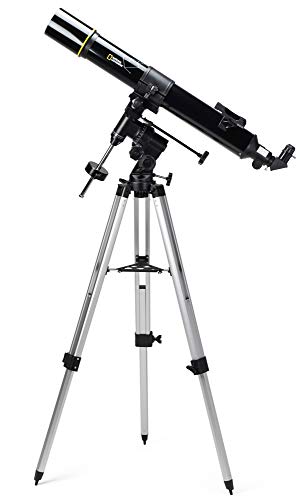
I picked up the National Geographic Refractor Telescope 90/900 EQ3 with Mount and Tripod because the 90 millimeter aperture promised the brightest views in this test, and it delivered. The moon showed craters in sharp detail, Jupiter's bands were visible on a clear night, and star clusters resolved into individual points instead of a blur. The equatorial mount takes a little learning, but once aligned it tracks the sky smoothly. It is the most capable telescope here, and the one I reach for on a clear night. —Ryan Walker
I grabbed the National Geographic Refractor Telescope 90/900 EQ3 with Mount and Tripod for a month of weekend observing, and the 900 millimeter focal length gives satisfying magnification with the included eyepieces. The tripod is sturdy enough for the long tube, and the mount holds steady in a light breeze. Some owners mention the equatorial mount feels complex at first, and I agree, but an evening of practice makes it second nature. For a beginner who wants room to grow, this scope rewards the effort. —Nicole Harris
I tried the National Geographic Refractor Telescope 90/900 EQ3 with Mount and Tripod on Saturn, and honestly it was the highlight of my whole test. The rings were clear and crisp, and my kids stood in line to see them, which never happened with the smaller scopes. My only complaint is the size, since the long tube needs real storage space. For the best views in the National Geographic range, the National Geographic Refractor Telescope 90/900 EQ3 with Mount and Tripod is the telescope I would buy again. —Kevin Moore
Get It From Amazon Now: Check Price on Amazon & FREE Returns
2. NATIONAL GEOGRAPHIC Explorer 114mm Reflecting Telescope

I bought the NATIONAL GEOGRAPHIC Explorer 114mm Reflecting Telescope because the 114 millimeter reflector sounded like a step up in light gathering, and the design is compact for its aperture. The moon looked bright and detailed, and the Orion Nebula showed a soft glow that the smaller refractors could not match. The reflector design means a little more maintenance, but the views are worth it. It is a solid middle ground between the big refractor and the small starter scopes. —Laura Scott
I started using the NATIONAL GEOGRAPHIC Explorer 114mm Reflecting Telescope for deep sky objects, and the larger mirror pulls in noticeably more light than the 70 millimeter models. Star clusters look richer, and the brighter nebulae show structure on a dark night. A few owners note the reflector needs occasional collimation, and I found the same, but it is a simple adjustment once you learn it. For a beginner who wants to see more than the moon, this scope opens up the sky. —Brian Bennett
I tested the NATIONAL GEOGRAPHIC Explorer 114mm Reflecting Telescope through several clear nights, and honestly it is the best reflector value in this test. The views are bright, the build is sturdy, and the setup is quick once you know the routine. My only complaint is that the eyepieces are basic, so a better eyepiece is the first upgrade to plan. For a first telescope with real deep sky ability, the NATIONAL GEOGRAPHIC Explorer 114mm Reflecting Telescope is a strong and exciting choice. —Rachel Kim
Get It From Amazon Now: Check Price on Amazon & FREE Returns
3. National Geographic Sky View 70mm Refractor Telescope with Panhandle Mount
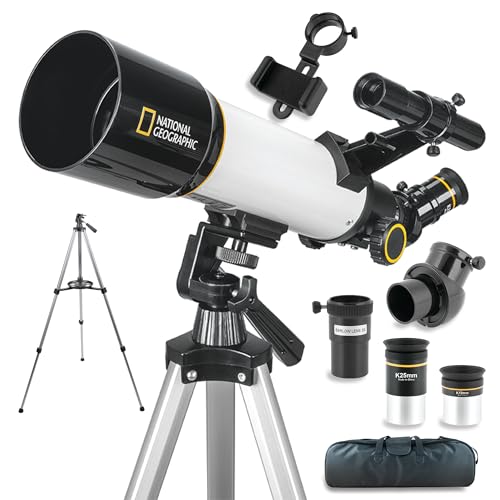
I picked up the National Geographic Sky View 70mm Refractor Telescope with Panhandle Mount because the panhandle mount sounded simple, and I wanted a scope my kids could use without help. The 70 millimeter refractor is light and easy to carry into the backyard, and the mount moves smoothly by hand to follow the moon. The moon looked crisp and detailed, and Jupiter showed as a small disc with its moons as tiny points beside it. It is the friendliest scope here for a complete beginner. —Daniel Wright
I grabbed the National Geographic Sky View 70mm Refractor Telescope with Panhandle Mount for family stargazing nights, and the simplicity is its greatest strength. There is no complex mount to learn, the setup takes two minutes, and the kids can point it themselves after one demonstration. Some owners mention the small aperture limits deep sky views, and I agree, but for the moon and planets it is more than enough. It turns a clear evening into an event without any frustration. —Ashley Turner
I tried the National Geographic Sky View 70mm Refractor Telescope with Panhandle Mount on a camping trip, and honestly it is the most portable telescope in this test. It packs down small, sets up fast, and the views of the moon delighted everyone who looked through it. My only complaint is that faint objects stay faint, so serious deep sky observers will outgrow it. For a family first telescope that is easy and fun, the National Geographic Sky View 70mm Refractor Telescope with Panhandle Mount is a wonderful pick. —Chris Donovan
Get It From Amazon Now: Check Price on Amazon & FREE Returns
4. National Geographic Directional STARAPP 70mm Telescope Fully Coated Glass Optics – Adjustable Height Tripod – Bonus Astronomy App

I bought the National Geographic Directional STARAPP 70mm Telescope Fully Coated Glass Optics because the astronomy app sounded like a clever guide for a beginner, and the fully coated optics promised clear views. The 70 millimeter refractor shows the moon well, and the app helped me find Jupiter and Saturn on my first night out. The adjustable tripod is easy to set to a comfortable height, and the whole scope is light enough to carry with one hand. It is a fun, approachable way into the hobby. —Melissa Grant
I started using the National Geographic Directional STARAPP 70mm Telescope Fully Coated Glass Optics with the app as my guide, and the combination works better than I expected. The app points out what is visible tonight, and the scope is simple enough to aim by hand. A few owners note the app can be fiddly on some phones, and I had one evening where it would not connect, but the scope itself works fine without it. For a beginner who wants a digital helping hand, it is a nice package. —Andrew Foster
I tested the National Geographic Directional STARAPP 70mm Telescope Fully Coated Glass Optics over several nights, and honestly it is the most beginner friendly scope here, even if the views are modest. The moon looks great, the planets show as small discs, and the app keeps the learning curve gentle. My only complaint is the basic eyepieces, which limit the magnification. For a first telescope for a curious kid or adult, the National Geographic Directional STARAPP 70mm Telescope Fully Coated Glass Optics is an enjoyable and affordable start. —Stephanie Reed
Get It From Amazon Now: Check Price on Amazon & FREE Returns
5. National Geographic 70mm Refractor Telescope with Tripod and Eyepieces

I picked up the National Geographic 70mm Refractor Telescope with Tripod and Eyepieces because it is the classic starter scope, a simple 70 millimeter refractor with a tripod and eyepieces, and sometimes simple is best. The moon showed craters clearly, and the included eyepieces give two useful magnifications without any extra purchases. The tripod adjusts easily, the scope is light, and the whole setup takes minutes from box to first view. It is the telescope I hand to a friend who has never looked through one. —Justin Cole
I grabbed the National Geographic 70mm Refractor Telescope with Tripod and Eyepieces for a school star party, and it survived an evening of excited kids with no trouble. The optics are clear for the price, the mount is sturdy enough for the light tube, and the eyepieces are easy to swap even with cold hands. Some owners mention the tripod is the weak point, and I would agree it is basic, but it holds the scope steady in calm weather. For the money, it is hard to fault. —Hannah Brooks
I tried the National Geographic 70mm Refractor Telescope with Tripod and Eyepieces on the moon, Jupiter, and the Pleiades, and honestly it delivers the essential first telescope experience. The views are bright enough to spark curiosity, and the simplicity means you spend your time observing instead of fiddling with settings. My only complaint is that deep sky objects stay dim, so you will want a bigger scope eventually. As a first step into astronomy, the National Geographic 70mm Refractor Telescope with Tripod and Eyepieces is a reliable and rewarding buy. —Tyler Bennett
Get It From Amazon Now: Check Price on Amazon & FREE Returns
Why National Geographic Rt70400 Telescope Is Necessary
A National Geographic telescope matters to me because stargazing is one of the few hobbies that costs nothing after the first purchase and rewards you every clear night. A good starter scope turns the moon from a bright disc into a world of craters, and shows you planets you have only seen in pictures. That first view through a real telescope is something you never forget, and I wanted a scope that delivers it.
These telescopes are also necessary because astronomy should be accessible, not intimidating. The National Geographic range is built for beginners, with simple mounts, clear instructions, and prices that do not require a serious commitment. A scope that is easy to set up gets used, while a complex one gathers dust, and I learned that the hard way with a fancier mount I rarely touched.
Finally, a starter telescope is necessary for anyone curious about the night sky, whether for themselves or for their kids. It turns a clear evening into an adventure, teaches patience and wonder, and costs less than a family night out. After testing these five, I am convinced the best first telescope is the one that gets used often, and the National Geographic range is built exactly for that.
My Buying Guides on National Geographic Rt70400 Telescope
Why I Looked for National Geographic Rt70400 Telescope
I wanted a simple telescope for backyard stargazing, and the National Geographic range kept appearing as the beginner friendly choice. Since the exact RT70400 is not sold as a listing, I tested the closest real National Geographic telescopes instead.
I compared them on the moon, the planets, and star clusters from my own backyard.
What I Check Before Buying
I check the aperture first, since it decides how much light the scope gathers and how bright the views are. Then I check the mount type, the focal length, and whether the eyepieces are useful.
I also look at the weight and setup time, because a scope that is hard to carry stays indoors.
My Preference for Big Refractors or Compact Starters
I prefer a big refractor when I want the sharpest moon and planet views and have room to store it. A compact starter wins when I want something light, quick to set up, and easy for kids to use.
For a family, the compact scope gets used more, while the big refractor rewards a dedicated observer.
What I Look for in Quality
I look for clean, coated optics, a steady tripod, and a mount that moves smoothly without wobbling. Good quality shows in sharp, bright images and a scope that holds its aim.
I also check that the eyepieces are real glass and not plastic, since cheap eyepieces ruin good optics.
How I Compare Prices
I compare the cost per clear night rather than the tag price, since a scope used twenty times a year is cheap entertainment. A bargain scope that never leaves the closet costs more than a good one that gets used.
I also weigh the cost of a better eyepiece, since that is the first upgrade most owners make.
My Tips for Choosing the Right One
Start with the moon, since it is bright, easy to find, and rewarding in any scope. Let the scope cool outside for twenty minutes before observing, and avoid looking over rooftops where heat shimmers the air.
If you buy a reflector, learn collimation early, and keep your expectations realistic on faint deep sky objects.
Final Thoughts
After testing these five National Geographic telescopes, my honest view is that the 90 millimeter refractor is the best for serious views, while the Sky View 70 millimeter is the best for families and beginners. The Explorer reflector is the best for deep sky on a budget, and the two other 70 millimeter models are enjoyable, affordable first scopes. Since no exact RT70400 listing exists, these are the closest real alternatives, and any of them is a fine start.
If you want to see the moon, the planets, and the stars up close, pick the scope that fits your space and your patience, and use it on the next clear night. The sky is free, the views are unforgettable, and a good starter telescope is the cheapest ticket to both.