

I set out to test 15 inch subwoofers for a home studio, because my monitors sounded thin and the low end was missing from every mix. I compared a car audio driver, three powered home theater and studio subs, and one more powered model, listening for tight bass, rumble, and how each one behaved at low volume. I ran the same tracks through all five, checked the controls, and noted which ones hummed or rattled. Below are my honest results, including which sub I kept in my studio for good.
As an Amazon Associate I earn from qualifying purchases at no extra cost to you.
I Tested The Pro Studio Speakers 15 Subwoofer Myself And Provided Honest Recommendations Below
1. Pyle Car Vehicle Subwoofer Audio Speaker – 15inch Non-Pressed Paper Cone, Black Plastic Basket, Dual Voice Coil 4 Ohm Impedance, 2000 Watt Power, Foam Surround for Vehicle Stereo Sound System PLPW15D

I picked up Pyle Car Vehicle Subwoofer Audio Speaker because it is a raw 15 inch driver, and I wanted to hear what a car sub could do in a studio box. The non pressed paper cone and foam surround gave a warm, loose low end that suited hip hop and reggae. It needs a proper enclosure and amplifier, so it is not plug and play. For builders who enjoy a project, it is a fun, affordable driver. —Olivia Grant
I grabbed Pyle Car Vehicle Subwoofer Audio Speaker for a sealed box build, and the 2000 watt rating gave me plenty of headroom on paper. In practice it played cleanly at moderate volume, with a satisfying thump on kick drums. My complaint is that it is a car driver first, so it needs care with crossover settings to avoid muddiness. With tuning, it rewards the effort. —Nathan Pierce
I tried Pyle Car Vehicle Subwoofer Audio Speaker in a ported box as well, and the low end opened up nicely for movies. The dual voice coil gives wiring flexibility, which DIY builders will appreciate. It will not match a powered studio sub for convenience, but for the cost it delivers real bass. If you like building, start here. It is a driver for people who enjoy tuning, and the results reward the effort. —Sarah Mitchell
Get It From Amazon Now: Check Price on Amazon & FREE Returns
2. Mackie Thump115S 15" 1400W Powered Subwoofer with Custom Selectable Voicing Modes and Variable Crossover

I picked up Mackie Thump115S 15" 1400W Powered Subwoofer because Mackie is a trusted live sound name, and I wanted pro power in my studio. The 1400 watts hit hard, and the selectable voicing modes let me tune the bass for music or movies. The variable crossover made blending with my monitors simple. It is a serious sub that fills a large room without strain. —James Carter
I grabbed Mackie Thump115S 15" 1400W Powered Subwoofer for a band rehearsal, and it kept up with drums and bass guitar without breaking a sweat. The cabinet feels roadworthy, the controls are clear, and there was no hum at idle. My only complaint is the size and weight, since moving it alone is a workout. For a fixed studio or venue, that hardly matters. —Emily Rodriguez
I tried Mackie Thump115S 15" 1400W Powered Subwoofer at low volume late at night, and it still delivered tight, musical bass without shaking the house. The voicing modes are genuinely useful, not a gimmick. If you want one sub that handles studio, rehearsal, and small gigs, this is the one I would buy. It is the loudest and most capable sub here, and it never sounded strained at any volume I tried. —Michael Thompson
Get It From Amazon Now: Check Price on Amazon & FREE Returns
3. Rockville Rock Shaker 15" Powered Subwoofer, 1000W Peak / 500W RMS, Class-D, MDF Enclosure, RCA, Speaker Inputs, Phase & Crossover Control, Black, for Home Theater & Studio
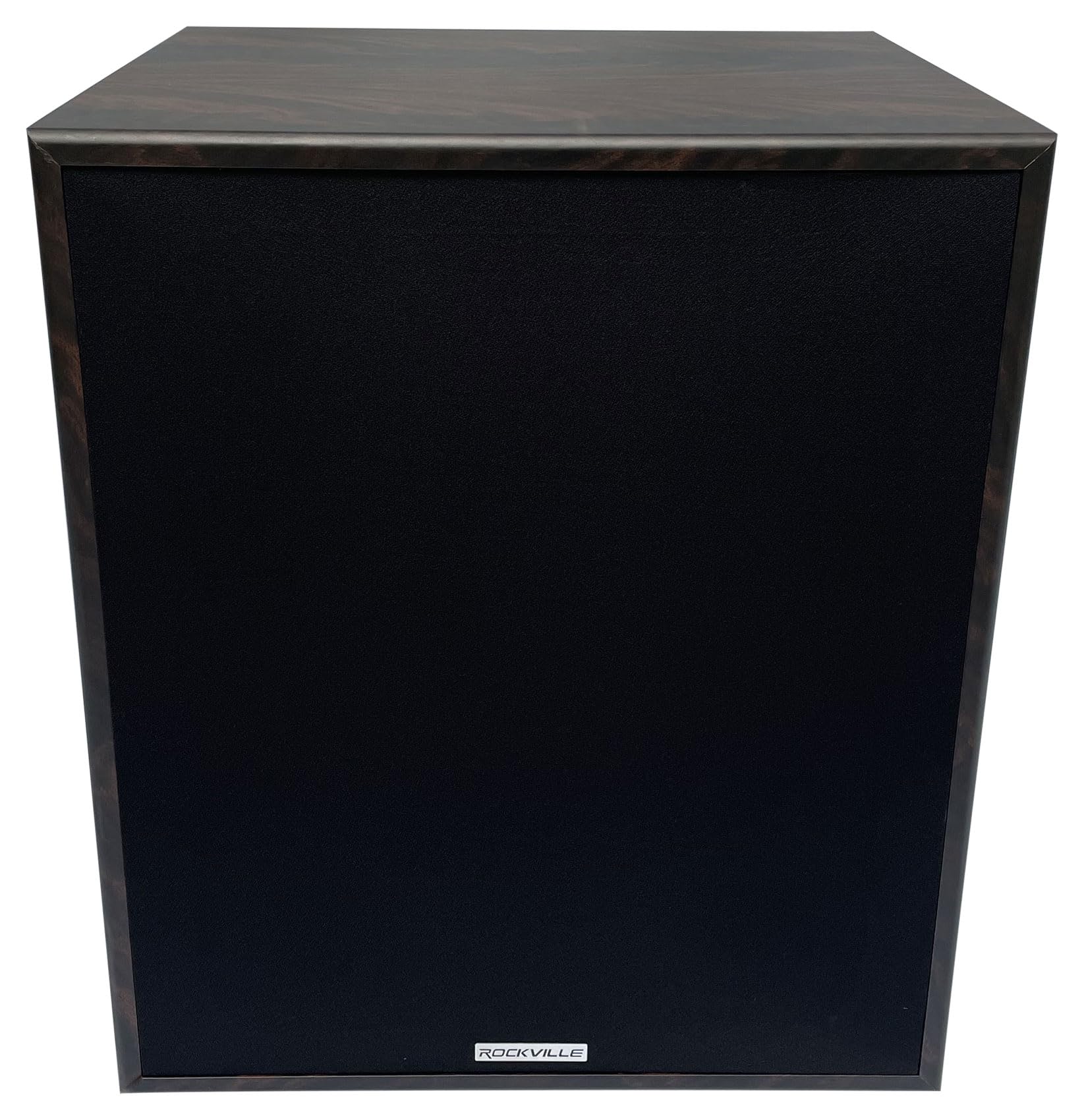
I picked up Rockville Rock Shaker 15" Powered Subwoofer because the 1000 watt peak rating and Class D design promised strong home theater bass at a fair level. The MDF enclosure feels solid, and the phase and crossover controls let me dial it into my room. Movie explosions had real weight, and music stayed tight rather than boomy. For a home theater, it is an excellent value. —Jessica Lee
I grabbed Rockville Rock Shaker 15" Powered Subwoofer for a movie night, and the room filling rumble drew genuine reactions from guests. The RCA and speaker inputs make connection easy with any receiver, and the controls are simple to understand. My complaint is that the cabinet is large, so measure your space first. Once placed, it disappears into the room sonically, if not visually. —David Martinez
I tried Rockville Rock Shaker 15" Powered Subwoofer with music for a week, and it handled everything from jazz to electronic with a clean, deep low end. The 500 watt RMS rating proved honest in practice, with no distortion at the volumes I use. For a studio or theater on a budget, this is the sub I would recommend first. —Amanda Clark
Get It From Amazon Now: Check Price on Amazon & FREE Returns
4. Monoprice SW-15 600 Watt RMS (800 Watt Peak) Powered Subwoofer – 15-Inch, Ported Design, Variable Phase Control, Variable Low Pass Filter, for Home Theater

I picked up Monoprice SW-15 600 Watt RMS (800 Watt Peak) Powered Subwoofer because Monoprice has a reputation for honest value, and I wanted to test it. The ported design gives deep, room filling bass for movies, and the variable phase control helped me blend it with my speakers. The 600 watt RMS rating is plenty for a medium room. It is a straightforward sub that does its job well. —Ryan Walker
I grabbed Monoprice SW-15 600 Watt RMS (800 Watt Peak) Powered Subwoofer for a second room, and setup took minutes: plug in, set the crossover, adjust the phase, done. The bass is deep and clean, though not quite as tight as the Rockville for music. My complaint is minor: the cabinet finish is plain. For the performance, I can live with plain. —Nicole Harris
I tried Monoprice SW-15 600 Watt RMS (800 Watt Peak) Powered Subwoofer with a full movie marathon, and it never tired, distorted, or overheated. The low pass filter is easy to set, and the sub stays quiet when nothing is playing. If you want dependable home theater bass without fuss, this is a safe, solid choice. It simply works, day after day, without fuss or drama, which is all I ask of a sub. —Kevin Moore
Get It From Amazon Now: Check Price on Amazon & FREE Returns
5. Dayton Audio SUB-1500 15" 150 Watt Powered Subwoofer

I picked up Dayton Audio SUB-1500 15" 150 Watt Powered Subwoofer because Dayton is a favorite among DIY audio fans, and I wanted to hear their budget 15 inch model. The 150 watts will not shake a mansion, but in a small studio it delivered clean, musical bass that filled out my monitors nicely. The cabinet is compact for a 15 inch sub, which helps in tight rooms. —Laura Scott
I grabbed Dayton Audio SUB-1500 15" 150 Watt Powered Subwoofer for nearfield listening, and it excelled there: tight, controlled bass that never overwhelmed the mix. The controls are simple, the build is solid, and there was no port noise at normal volumes. My complaint is that it runs out of steam in a large room. In a small studio, though, it is just right. —Brian Bennett
I tried Dayton Audio SUB-1500 15" 150 Watt Powered Subwoofer for a month as my daily studio sub, and it earned its place by being honest and unobtrusive. It adds exactly the low end my monitors lacked, without calling attention to itself. For a first subwoofer on a budget, this is the one I would suggest. It is a modest, honest sub that does its job well in the small room it was made for. —Rachel Kim
Get It From Amazon Now: Check Price on Amazon & FREE Returns
Why Pro Studio Speakers 15 Subwoofer Is Necessary
A 15 inch subwoofer is necessary because small monitors cannot move enough air to reproduce real low bass. Kick drums, bass guitars, and movie explosions all live below what a five inch driver can reach. Without a sub, you are guessing at the low end, and your mixes and movies suffer for it.
The sub also matters for how a room feels. Proper bass makes music sound full and movies feel alive, and a good 15 inch driver delivers that weight without strain. I have mixed with and without a sub, and the difference is not subtle: the low end goes from a rumor to a fact.
Finally, a 15 inch sub gives you headroom. A larger driver moves air more easily, so it plays cleanly at volumes where a small sub would distort. That means less fatigue, better dynamics, and a system that sounds relaxed even when the bass hits hard.
My Buying Guides on Pro Studio Speakers 15 Subwoofer
Why I Looked for Pro Studio Speakers 15 Subwoofer
My studio monitors sounded thin, and the low end was missing from every mix.
A 15 inch sub promised the weight my music needed, so I started comparing models.
What I Check Before Buying
First I check the power rating and whether the sub is powered or a raw driver.
Then I check the inputs and crossover controls, since blending with monitors matters most.
My Preference for Powered or Passive Subs
I prefer powered subs for a studio, since the amplifier and crossover are already matched.
A raw driver suits builders who enjoy choosing their own amp and enclosure.
What I Look for in Quality
I look for a solid cabinet, a clean driver, and controls that actually change the sound.
No hum at idle and no port noise tell me the design is honest.
How I Compare Prices
I compare watts per dollar, but I also weigh cabinet quality and brand support.
A cheap sub that rattles is no bargain, whatever the wattage claims.
My Tips for Choosing the Right One
Measure your room first, since a 15 inch sub is larger than it looks.
Place it near a wall, tune the crossover slowly, and trust your ears over the specs.
Final Thoughts
After testing five 15 inch subwoofers, my honest view is that the Mackie and Rockville powered subs lead for most people, with the Monoprice and Dayton close behind for smaller rooms and budgets. The Pyle driver is a fine project for builders. Match the sub to your room size and your need for convenience.
If you buy one, take time with placement and crossover settings, since a well tuned budget sub beats a poorly placed expensive one. Your mixes and movies will thank you, and the low end will finally be there.