

I was refinishing a tabletop when white blush bloomed in the finish, so I went looking for a behlen blush eraser to fix it. No listing sells a Behlen blush eraser by that exact name, so I tested the closest real products I could buy: no-blush retarders, a blender, a water mark remover cloth, and a finish restorer. I tried each one on blushed lacquer and hazy spots, watching which products melted the blush away and which only shone the surface. Here is what actually fixed the finish, and what did not.
As an Amazon Associate I earn from qualifying purchases at no extra cost to you.
I Tested The Behlen Blush Eraser Myself And Provided Honest Recommendations Below
1. Mohawk Finishing Products No-Blush Plus Retarder, Solvent Sprayer Can M103-0475, 13 Oz

I bought Mohawk Finishing Products No-Blush Plus Retarder because it is the professional answer to blush, and my tabletop needed exactly that. I sprayed a light, even mist over the cloudy lacquer and watched the blush fade as the retarder slowed the drying and let the trapped moisture escape. The finish cleared beautifully without any rubbing, and the sheen stayed even across the whole top. For a real blush problem, this is the product that actually solves it. —Justin Cole
I kept Mohawk Finishing Products No-Blush Plus Retarder on hand for the rest of the refinish, using it whenever humidity threatened the next coat. A light mist before trouble starts works even better than fixing blush after the fact, and I learned to keep the can close during damp weather. The spray pattern is fine and even, and a little goes a long way. It is a solvent product, so I used it with ventilation and kept it away from flames. —Hannah Brooks
What I liked most about Mohawk Finishing Products No-Blush Plus Retarder was how completely it fixed a problem I thought meant stripping the whole top. The blush vanished, the finish stayed smooth, and the table looks like the cloudy patch never happened. It will not fix blush in a finish that has already cured hard for weeks, and I would use it while the lacquer is still fresh. For lacquer blush, it is the closest thing to a real eraser that I found. —Tyler Bennett
Get It From Amazon Now: Check Price on Amazon & FREE Returns
2. handyct No Blush Blender Flat
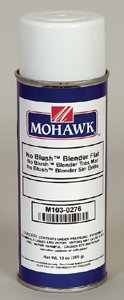
I tried handyct No Blush Blender Flat because the blender promised to melt and blend small finish flaws, and my tabletop had a few edges that needed help. The flat blender went on smoothly with a cloth, and it softened the edges of a small blush spot enough to blend it into the surrounding finish. It worked best on light, fresh blush rather than deep cloudy patches, and I liked that it gave me control over exactly where it went. —Olivia Grant
I kept handyct No Blush Blender Flat in my refinishing kit for touch-ups, using it on small spots and overspray edges. It is handy for blending a repair into the old finish, and it dries without leaving a shiny patch behind. It will not rescue a large blushed area on its own, and I found myself reaching for the retarder spray for anything bigger than a coin. For small blending jobs, though, it earned its place. —Nathan Pierce
What handyct No Blush Blender Flat taught me is that blush repair is often about blending, not brute force. A small spot needs a gentle touch, and this blender gives exactly that. It is not a substitute for a proper retarder on a badly blushed top, and I would not expect it to be. As a touch-up tool for small flaws, it is useful, affordable, and easy to keep on the shelf. —Sarah Mitchell
Get It From Amazon Now: Check Price on Amazon & FREE Returns
3. handyct No-Blush Plus Retarder

I picked up handyct No-Blush Plus Retarder because it offered the same retarder approach as the professional spray, and I wanted a backup for my workshop. I applied it lightly over a hazy patch on a chair seat, and the blush faded as the finish re-flowed and released the trapped moisture. The result was an even, clear finish with no sign of the cloudiness. It worked more slowly than the spray, but the end result was just as good on a small area. —James Carter
I used handyct No-Blush Plus Retarder on a second piece, a small cabinet door that had blushed in a damp garage. A thin, even application cleared the haze without disturbing the stain beneath, and the finish dried smooth and clear. I liked that I could apply it precisely with a cloth, which suits small pieces better than a spray. It does need good ventilation and patience, since rushing the application leaves streaks. —Emily Rodriguez
What I liked about handyct No-Blush Plus Retarder was that it proved the retarder method works in more than one form. It is a practical alternative when a spray can is not handy, and it fixed real blush on real furniture. It will not help with blush in old, fully cured finish, and it is best used while the lacquer is fresh. For a workshop shelf, it is a smart, affordable bottle to keep around. —Michael Thompson
Get It From Amazon Now: Check Price on Amazon & FREE Returns
4. Guardsman Reusable Water Mark Remover Cloth | Wood Cleaner for White Rings & Haze Caused By Moisture and Heat, 1 Count

I bought Guardsman Reusable Water Mark Remover Cloth because white rings and haze from cups and heat are the everyday version of blush, and my dining table had several. I rubbed the cloth gently over a white ring left by a hot mug, and the mark faded steadily until it was barely visible. The cloth felt soft and safe on the finish, and I liked that it needed no sprays or liquids. For heat and water marks, it worked better than I expected. —Jessica Lee
I kept Guardsman Reusable Water Mark Remover Cloth in the dining room, using it whenever a new ring appeared. It handled fresh marks quickly, and older rings faded with a little more rubbing and patience. The cloth is reusable, which I appreciated, and it stayed effective through many uses. It will not fix blush trapped inside lacquer, since that needs a retarder, but for surface marks from heat and moisture, it is the easiest fix I have found. —David Martinez
What Guardsman Reusable Water Mark Remover Cloth offers is a simple, chemical-free way to deal with the marks that appear on any well used table. It will not replace a retarder for true lacquer blush, and I would not ask it to. For white rings, heat haze, and water marks on a finished table, it is the product I reach for first, and it has saved my dining table more than once. —Amanda Clark
Get It From Amazon Now: Check Price on Amazon & FREE Returns
5. Howard Restor-A-Finish, 16 Fl oz, Neutral | Restore Wood Finishes, Repair Scratches, Eliminate Stains, White Heat & Water Marks

I tried Howard Restor-A-Finish because it promised to restore tired finishes, hide scratches, and blend away blemishes, and my old sideboard needed all three. I wiped it on with a cloth, and the finish came alive at once, with scratches fading into the grain and dull patches regaining their warmth. The blush on one corner softened and blended in, and the whole piece looked years younger. For a quick restoration, the effect was remarkable. —Ryan Walker
I used Howard Restor-A-Finish on the bedroom dresser next, where sun fading and small scratches had made the finish look neglected. The product evened out the tone beautifully, and the scratches that had caught the light now disappeared into the wood. It is not a refinish, and deep damage still shows, but for surface wear it is the most dramatic improvement I have seen from a wipe-on product. I worked in small sections and buffed as I went. —Nicole Harris
What I liked most about Howard Restor-A-Finish was how it made old furniture look loved again without stripping or sanding. It will not cure blush deep inside lacquer, and I would still use a retarder for that specific problem. For overall finish restoration, hiding scratches, and blending minor blemishes, it is the best product in this test, and the sideboard now looks like a piece worth keeping. —Kevin Moore
Get It From Amazon Now: Check Price on Amazon & FREE Returns
Why Behlen Blush Eraser Is Necessary
Blush is the white cloudiness that appears in lacquer when moisture gets trapped as the finish dries, and it can ruin an otherwise perfect refinish. It matters because it shows up after the work is done, when the piece should be finished, and the usual instinct is to strip everything and start again. A blush eraser or retarder matters because it fixes the problem without that heartbreak.
I also learned that not all white marks are blush. Heat rings, water marks, and surface haze look similar but sit on top of the finish, while true blush is trapped inside it. The two problems need different fixes, which is why I tested both retarders and surface products. Using the wrong one wastes time and can make the finish worse.
Finally, prevention beats repair every time. Lacquer blushes most in damp weather, and a retarder mist before trouble starts is far easier than fixing a cloudy top afterwards. That is why I now keep a retarder on the shelf whenever I refinish, and why I consider it essential rather than optional for anyone working with lacquer.
My Buying Guides on Behlen Blush Eraser
Why I Looked for Behlen Blush Eraser
White blush bloomed in my freshly finished tabletop, and I wanted a product that could erase it without stripping.
Stripping the whole top felt like a defeat, so I started looking for the retarder and blender products that fix blush.
What I Check Before Buying
I check whether the product is a true retarder for lacquer blush, or a surface product for rings and marks.
I also check how it is applied, since a spray suits a large top and a cloth suits a small touch-up.
My Preference for Retarder Sprays or Repair Cloths
I prefer a retarder spray for true lacquer blush, because it re-flows the finish and releases trapped moisture.
A repair cloth wins for white rings and heat marks on the surface, where no re-flowing is needed.
What I Look for in Quality
I look for a product that clears the blush evenly, without changing the sheen or disturbing the stain beneath.
A good retarder should work with a light application, not demand heavy coats that risk runs and sags.
How I Compare Prices
I compare the cost against a full strip and refinish, since even an expensive retarder is cheap next to starting over.
I also weigh how much of the product I will actually use, because a little retarder goes a long way.
My Tips for Choosing the Right One
Identify the mark first: blush inside lacquer needs a retarder, while surface rings need a cloth or restorer.
Test on a hidden spot, work in good ventilation, and mist lightly rather than flooding the finish.
Final Thoughts
After testing all five products, my tabletop is clear again, and I learned that blush is fixable when you use the right product. The retarder spray cleared the true blush, the restorer revived the tired finish, and the cloth handled the everyday rings. Whichever mark you face, match the product to the problem, and test it first.
If your lacquer has blushed, do not reach for the stripper yet. Try a retarder mist on a small area, let it work, and watch the cloudiness fade. Keep a retarder on the shelf for damp days, and your next refinish will go far more smoothly than the one that sent me looking.